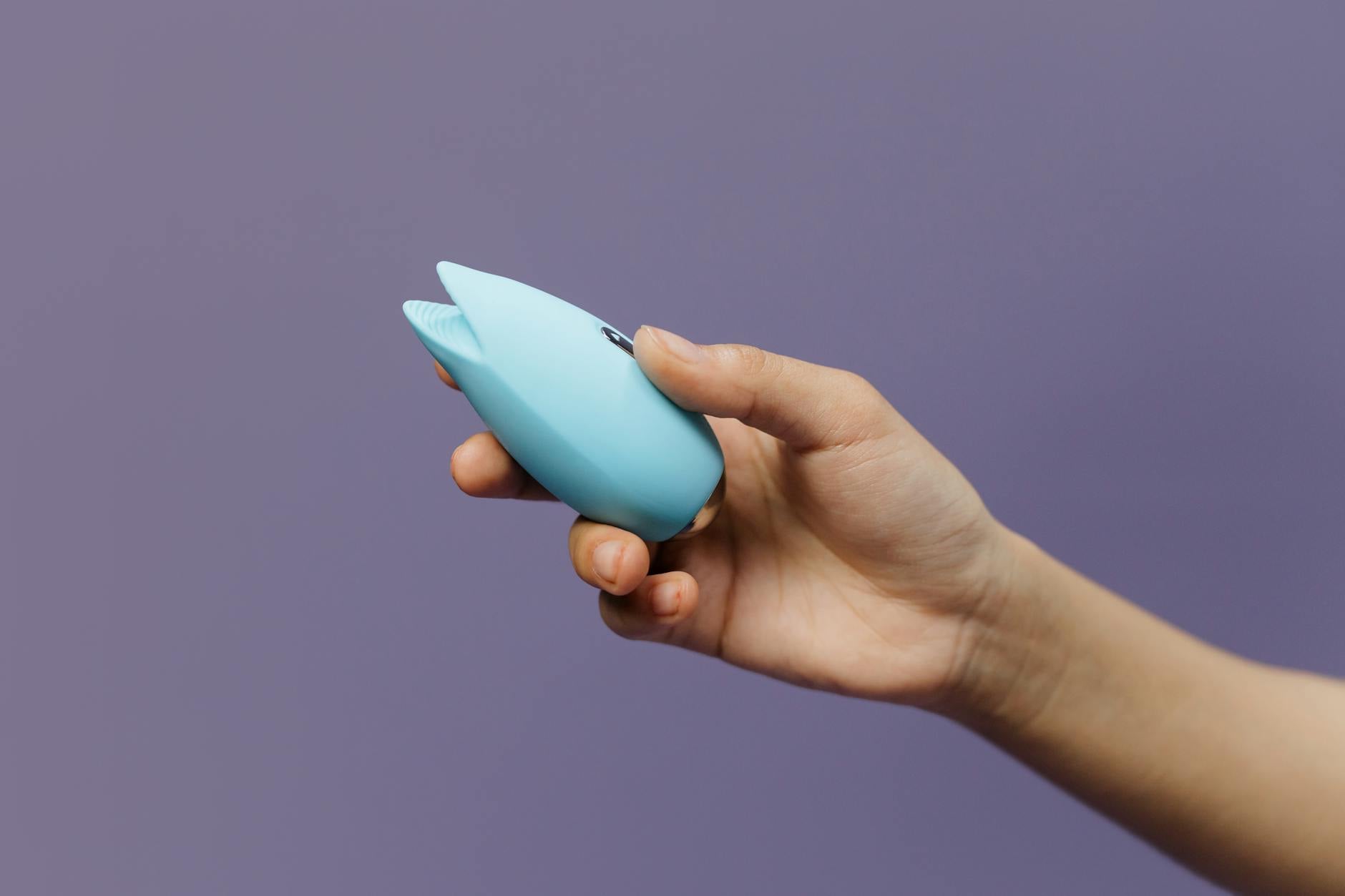
The sensitivity question nobody talks about
Let's be real: a lot of people think their clitoris is too sensitive for vibrators. The vibration feels too intense, too direct, almost like it's too much stimulation all at once. So they give up. They assume vibrators just aren't for them.
Here's the thing. It's probably not that you're too sensitive. It's that traditional vibrators are designed the wrong way for how your body actually responds.
Why traditional vibration can feel like too much
Most vibrators work through direct mechanical oscillation. The device itself vibrates rapidly against your skin, and that vibration intensity stays constant or increases with settings. If you have a sensitive clitoris, that direct contact feels like pressure plus movement plus intensity all landing in the same spot, all at once. It's not painful exactly, but it's overwhelming.
The clitoris has roughly 8,000 nerve endings packed into a tiny area. When you apply steady vibration directly to that, you're essentially flooding all those nerves with the same signal repeatedly. For some bodies, that's exactly what they want. For others, it reads as overstimulation rather than pleasure.
The kicker: sensitivity isn't weakness. It usually means your nervous system is picking up signals efficiently. You need a different kind of input, not less stimulation overall.
How lemon vibrators (air-suction clitoral vibrators) work differently
Lemon clitoral vibrators like the Lem use air-suction technology instead of direct vibration. Instead of the device itself oscillating against your skin, it creates gentle pulses of air pressure that stimulate the clitoris indirectly. Think of it as a rhythmic sucking sensation rather than a buzzing one.
This matters because the clitoris isn't just the small external part you can see. It's a complex structure that extends internally, with a shaft, a hood, and thousands of nerve endings distributed throughout. Air-suction reaches deeper tissues without the mechanical pressure of direct vibration.
For someone with a sensitive clitoris, this changes everything. You get intense stimulation without the harsh surface pressure. The sensation builds gradually rather than hitting all at once. And you can control exactly how much suction you're receiving.
Why precision feels better on sensitive skin
One of the underrated benefits of the Lem and similar lemon clitoral vibrators is precision. You're not trying to vibrate your entire vulva. You're targeting one specific area with one specific type of stimulation.
With traditional vibrators, you often have to experiment with angles, pressure, and placement to find the sweet spot. You're essentially doing a search-and-rescue mission every time. With air-suction, the opening is designed to fit over the clitoris, so you skip that whole adjustment phase.
This precision means you can use lower intensity settings and still get satisfying results. Lower intensity settings feel less overwhelming on sensitive tissue. You're not compensating for a bad angle or insufficient contact. Everything is dialed in from the start.
The pattern variety makes a real difference
Most lemon vibrators offer multiple patterns and intensity levels, separate from the vibration speed itself. You might have a steady pulse, a building pulse, a wave pattern, or a rapid fluttering pattern. This variety matters for sensitive bodies because it gives you options.
With a sensitive clitoris, you might find that a slow, steady pulse at low intensity feels perfect, while a rapid vibration at high intensity feels painful. The patterns let you match the exact rhythm your body responds to. You're customizing the experience to your nervous system, not forcing your nervous system to adapt to the device.
Many people with clitoral sensitivity report that they prefer patterns with space between pulses. A rhythm that builds and releases feels more manageable than constant stimulation. You can try a pulsing pattern starting at the lowest intensity and gradually increase, rather than jumping into steady vibration.
How warm-up time connects to sensitivity
Here's something often missed: clitoral sensitivity can shift based on arousal level. When you're just starting, the clitoris is less engorged, and touch can feel sharper or more intense. As arousal builds, blood flow increases and the tissue becomes more responsive but also less sensitive to direct pressure.
This is why warm-up matters. Spending 10-15 minutes on foreplay, external stimulation, or even just breathing and getting into the moment before using a lemon vibrator makes the experience feel completely different. The tissue is more prepared, and you're less likely to hit it with intensity when it's not ready.
With air-suction devices, you can start at extremely low settings during arousal build and gradually increase as you're ready. The gentleness at the beginning means you don't startle your nervous system. You're easing in rather than surprising it.
Lubrication and contact
Sensitivity often improves with proper lubrication, even for air-suction devices. Water-based lube creates a better seal between the device opening and your skin, which makes the suction more effective and the sensation more controlled. Without that seal, you might feel more surface-level stimulation, which can read as irritating rather than pleasurable.
A small amount of lube applied directly to the clitoris before using a lemon vibrator gives you smoother contact and lets the suction work as designed. The device glides better, the seal is tighter, and the sensation feels more integrated rather than jarring.
Pattern cycling and adaptation
One thing I've noticed with clients who have sensitive clitorises: staying on one pattern for too long can create adaptation. The nerve endings get used to the input and ask for something different. This isn't a sign that the device isn't working. It's a sign that you're ready for a shift.
With a lemon clitoral vibrator offering 10+ patterns and multiple intensity levels, you have built-in variety. You can switch patterns every 30 seconds, every minute, or whenever you feel the sensation flattening. This keeps your nervous system engaged and prevents that numb feeling that sometimes happens with longer sessions.
When sensitivity might need investigation
If you're experiencing sharp pain, burning, or increasing discomfort with any stimulation (even air-suction at the lowest setting), that's worth checking out. Sensitivity is normal and manageable. Pain is different, and it warrants a conversation with a doctor or pelvic floor specialist.
Conditions like vulvodynia, pelvic floor tension, or dermatological sensitivities can all affect how stimulation feels. None of these mean you can't enjoy toys. They just mean you might need professional guidance to figure out what works for your specific body.
The confidence piece
Honestly, a lot of the benefit comes from finally using a device that feels good instead of forcing yourself through something uncomfortable. When you find the right tool, something shifts. You stop bracing yourself and start actually enjoying it.
That shift matters. Pleasure responds to confidence and ease. When you're not worried about overstimulation, when you're not gritting your teeth through settings that are too intense, your nervous system relaxes. Your body opens up. Everything feels better.
A lemon clitoral vibrator isn't a magic wand. But for a lot of people with sensitive clitorises, it's the first device that actually fits how their body works.
FAQs: Lemon Vibrators and Clitoral Sensitivity
Does air-suction feel completely different from vibration?
Yes and no. Both can deliver intense pleasure, but the path there is different. Vibration is a continuous oscillation. Air-suction is a rhythmic compression and release. For sensitive bodies, the rhythm and the indirect approach often feel gentler and more controllable. Many people describe it as feeling more like a massage or a sucking sensation rather than a buzzing one. You'll definitely notice the difference if you try both.
Can I use a lemon vibrator if my clitoris hurts when touched directly?
Maybe, but that pain deserves investigation first. A little bit of sensitivity is normal and manageable. Sharp pain or burning when even light pressure is applied suggests you might benefit from seeing a pelvic floor therapist or gynecologist before trying any vibrator. Once you've ruled out dermatological issues or tension patterns, air-suction devices are often a good starting point because of how gentle they can be at low settings.
What intensity should I start at if I have a sensitive clitoris?
Start at the lowest setting available on the lemon vibrator you choose. The Lem has multiple levels, and I'd recommend beginning at level 1 with a gentle pattern (not the most intense oscillation). You can always increase from there. It's much easier to go up than to recover from starting too high. Many people find that staying at level 1 or 2 is actually where they get the best results, which contradicts the assumption that "more intense equals better."
How long should I use a lemon clitoral vibrator during each session?
There's no universal answer, but 10-30 minutes is common for people with sensitive clitorises. Shorter sessions often feel better than longer ones because you're less likely to experience desensitization or irritation. If you feel numbness setting in, that's your cue to switch patterns or take a break. Quality over duration is the name of the game.
Is sensitivity worse during certain parts of my cycle?
Yes, for most people. If you menstruate, sensitivity often peaks right before your period when hormone levels shift. During this time, you might need even lower settings on your lemon vibrator, or you might want to skip it entirely and stick to other kinds of touch. Tracking when sensitivity changes helps you adjust your approach proactively rather than getting frustrated mid-session.
Can lube actually make a difference in how a lemon vibrator feels?
Completely. Water-based lube creates a seal between the device and your skin, which makes the air-suction mechanism work as designed. Without it, you might feel more scattered sensation. With it, the stimulation feels more concentrated and controlled. It's not a luxury. It's a functional component of using the device well, especially if you have sensitive tissue.
The bottom line
Sensitivity doesn't mean vibrators aren't for you. It means you need to find the right kind of vibrator for your body. For a lot of people, that's a lemon clitoral vibrator using air-suction technology like the Lem. The indirect approach, the precision, and the pattern variety make it possible to experience intense pleasure without overwhelming your nervous system.
Start low, go slow, and pay attention to what actually feels good rather than what you think you're supposed to enjoy. Your sensitive clitoris isn't a problem to solve. It's information worth listening to.
If you're ready to explore what works for you, we're here to help. Check out our buying guide for more on choosing a lemon vibrator, or reach out at /contact with any questions about what might work best for your body.