Let's talk about the thing nobody says out loud
Intercourse pain is not a sign that something is fundamentally broken. It's your nervous system sending a legitimate distress signal, and most of the time, that signal is pointing at tension, not pathology. The good news: lemon vibrators address the root cause in a way that penetration alone simply cannot.
If you've been white-knuckling your way through sex because it hurts, or avoiding it entirely because you know it will, this changes the conversation.
The physiology behind intercourse pain
Here's what actually happens when penetration hurts. Your pelvic floor muscles tighten in anticipation of pain. This is a protective reflex, the same one that makes you flinch when you touch a hot stove. But unlike a hot stove, this reflex then creates the pain it was trying to prevent. You tense. Tension reduces lubrication and blood flow. Reduced blood flow makes tissue more sensitive. More sensitivity means more pain. More pain means more tension. You're now locked in a feedback loop.
Therapists call this vaginismus when it's severe, but honestly, mild versions of this cycle are so common they barely make it into clinical notes. The pelvic floor is skeletal muscle, meaning it responds to anxiety, stress, and anticipatory fear the same way your shoulders do when you're braced for impact.
Clitoral stimulation breaks this cycle at the nervous system level.
Why clitoral suction changes the game
Lemon clitoral vibrators work differently than traditional vibration. Suction stimulation activates the parasympathetic nervous system, the branch responsible for relaxation and arousal. When your clitoris receives sustained suction, something shifts in your brain's response to touch.
Here's the mechanism: suction creates a gentle pulling sensation that builds arousal gradually and predictably. This consistency matters. Your nervous system learns that this sensation equals safety, not threat. Once your brain categorizes clitoral stimulation as safe, it stops bracing your pelvic floor against penetration.
You're not forcing relaxation. You're retraining your threat response.

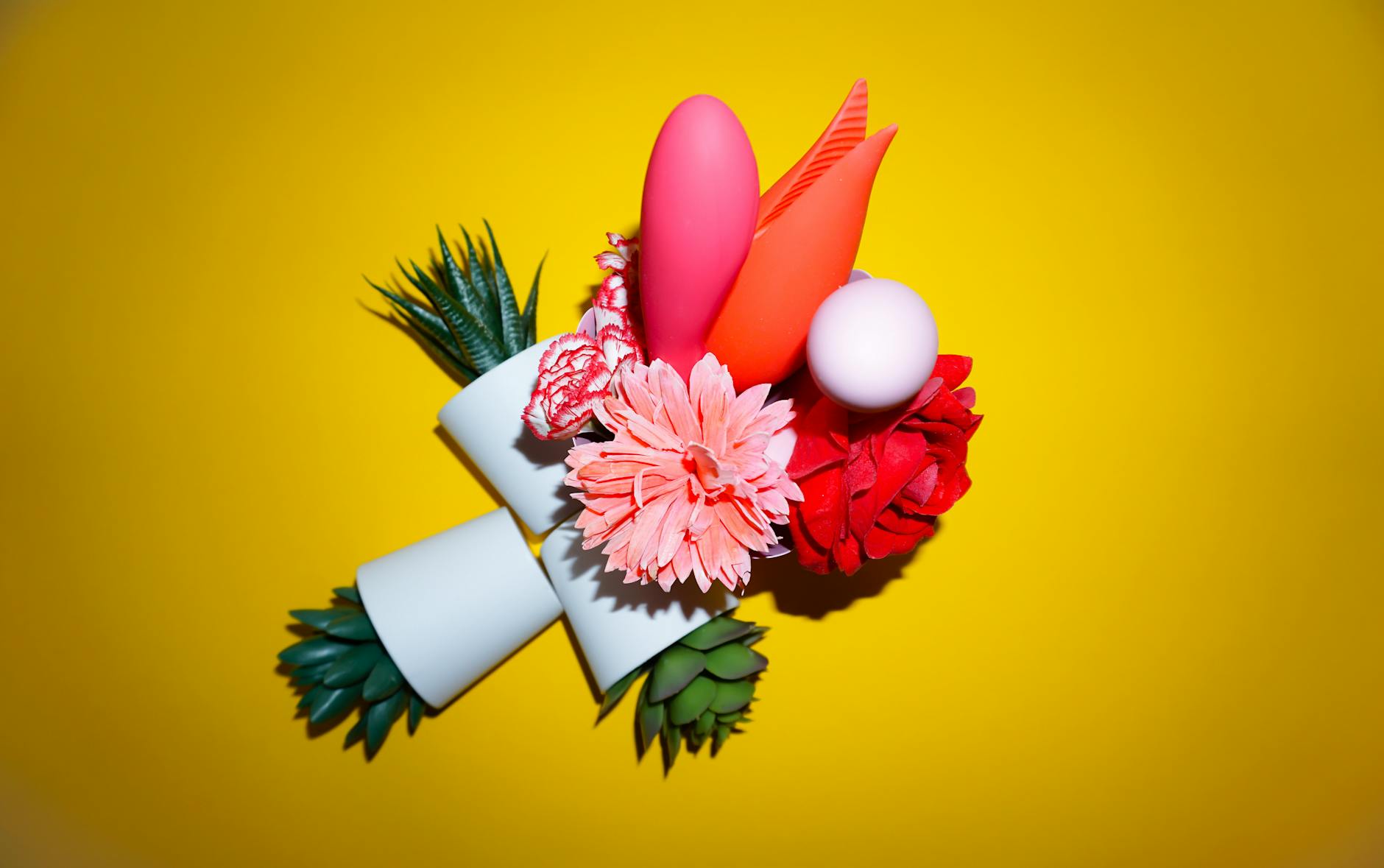
Photo by FounderTips on Pexels
Many people report that after a few weeks of regular clitoral stimulation with a lemon vibrator, their pelvic floor spontaneously relaxes during intercourse without them doing anything conscious about it. The nervous system simply updates its threat assessment.
The arousal priming protocol
This is the part that changes outcomes. Instead of going straight to intercourse, spend 15-20 minutes with a lemon vibrator first. Not as foreplay that builds toward penetration, but as a full arousal event on its own.
Why this matters: when your clitoris is activated through suction, blood redirects to your pelvic region. Arousal spreads downward from clitoral activation. Vaginal lubrication increases. Tissue becomes more elastic and forgiving. Your pelvic floor, already in a parasympathetic state from sustained clitoral stimulation, stays relaxed during penetration because your nervous system is actively in arousal mode, not threat mode.
You're not just adding pleasure to penetration. You're creating the physiological conditions that make pain impossible.
The communication piece your partner needs to understand
Between you and me: the hardest part of this fix is not the vibrator. It's telling your partner that penetration might not happen tonight. Or that when it does, it comes after 20 minutes with a lemon vibrator, not before.
Many partners worry that introducing a vibrator means they're being replaced or that something is wrong with them. Reframe this completely. You're not adding a replacement. You're adding the ingredient that makes penetration actually work. Most intercourse pain exists because people skip the arousal phase that makes penetration safe. A lemon vibrator compresses that arousal phase into something reliably effective instead of hoping it happens through conventional foreplay.
A good partner understands this. A great partner asks what settings work best and becomes part of the ritual.
Positions and penetration after arousal
After 15-20 minutes with a clitoral vibrator, your body is genuinely ready for penetration in a way it might not have been before. But position matters. Angles that press into the front wall of your vagina toward your clitoris feel better than angles that miss that landscape entirely.
Many people find that angles that feel slightly uncomfortable or slightly too deep without arousal become perfect with arousal. Your tissue is more elastic. Your pelvic floor is cooperating instead of guarding. Penetration that previously felt invasive now feels integrated.
Start slowly. Your nervous system is in learning mode. If you rush, you teach it that penetration still means threat. Go slow enough that you can attend to sensation instead of bracing.
When to escalate or seek help
If sharp pain appears during intercourse even after consistent clitoral stimulation, this warrants evaluation. Endometriosis, pelvic inflammatory disease, and other structural issues won't resolve through nervous system retraining alone. A gynecologist trained in sexual health can distinguish between tension-based pain and pathological pain within minutes.
Similarly, if your pelvic floor remains locked even with sustained clitoral arousal, pelvic floor physical therapy is incredibly effective. A specialized PT can teach you to consciously relax muscles you didn't know you were tensing. Combine that with regular use of a lemon vibrator and intercourse pain often resolves in 6-12 weeks.
The long game
Intercourse pain is not a life sentence. It's not a sign that your body is broken or that you're not attracted to your partner or that penetrative sex isn't possible for you. It's a signal that your nervous system learned a protective response and needs permission to unlearn it.
Lemon clitoral vibrators give your nervous system exactly that permission. Consistent, sustained clitoral activation teaches your brain that pleasure is possible and safe. Once that pattern rewires, intercourse pain often dissolves without any additional intervention.
Your pleasure matters. Pain during intercourse steals that pleasure. You deserve the information and tools to reclaim it.
People also ask
Can a lemon vibrator actually stop intercourse pain or just help during it?
Both. In the moment, sustained clitoral arousal before penetration creates the physical conditions that make pain unlikely. Over time, regular use retrains your pelvic floor's baseline response to touch. Most people find that within a few weeks of consistent use, even penetration without prior clitoral stimulation becomes less painful because your nervous system has updated its threat assessment. The vibrator is not a band-aid. It's a retraining tool.
How long does it take to notice a difference?
Some people feel a shift in a single session. Your pelvic floor genuinely does relax differently when you're in active arousal. But lasting change, where your nervous system stops bracing preemptively, usually takes 3-6 weeks of consistent use. Consistency matters more than intensity. Two or three times a week beats once a week.
Is intercourse pain always about tension, or could it be something else?
Tension-based pain is incredibly common, but it's not the only cause. Inadequate lubrication, insufficient arousal, hormonal changes, endometriosis, vaginismus, and structural issues all exist. That said, even when structural issues are present, nervous system tension usually layers on top and makes pain worse. Addressing the tension component helps either way. If pain persists after six weeks of consistent arousal work, see a gynecologist.
What if my partner thinks I need a vibrator because they're not enough?
This is the cultural narrative that needs to die. A vibrator is a tool that creates arousal, not a judgment on your partner's adequacy. A lemon vibrator does something specific: it activates your clitoris through sustained suction. Your partner's hands, mouth, and presence do something else: they create intimacy and connection. These are not competing. A vibrator enables the physical conditions that make intercourse possible and pain-free. That benefits both of you.
Are there settings or patterns that work better for pain relief?
Yes. For nervous system retraining, you want sustained, gentle suction rather than intense pulsing. Most lemon vibrators have multiple settings. Start at lower intensities (settings 1-3) and spend 15-20 minutes on each session. Your goal is parasympathetic activation, not orgasm, though orgasm is a nice bonus. Intensity matters less than consistency and length of stimulation.
What if I've tried vibrators and they made intercourse pain worse?
This usually means you skipped the arousal phase and went straight to penetration, or used a vibrator that created tension rather than relaxation. High-intensity vibration can sometimes trigger protective tension. Suction-based stimulation from lemon clitoral vibrators works on a different neurological pathway. They're gentler and more parasympathetic-activating. Worth trying if traditional vibration didn't work.
Final word
Intercourse pain is solvable. Most of the time, it's not a permanent feature of your body. It's a learned protective response that can be unlearned. Lemon vibrators, used consistently over a few weeks, often rewire that response entirely. Your nervous system is capable of learning that pleasure is safe. Give it the right signal.