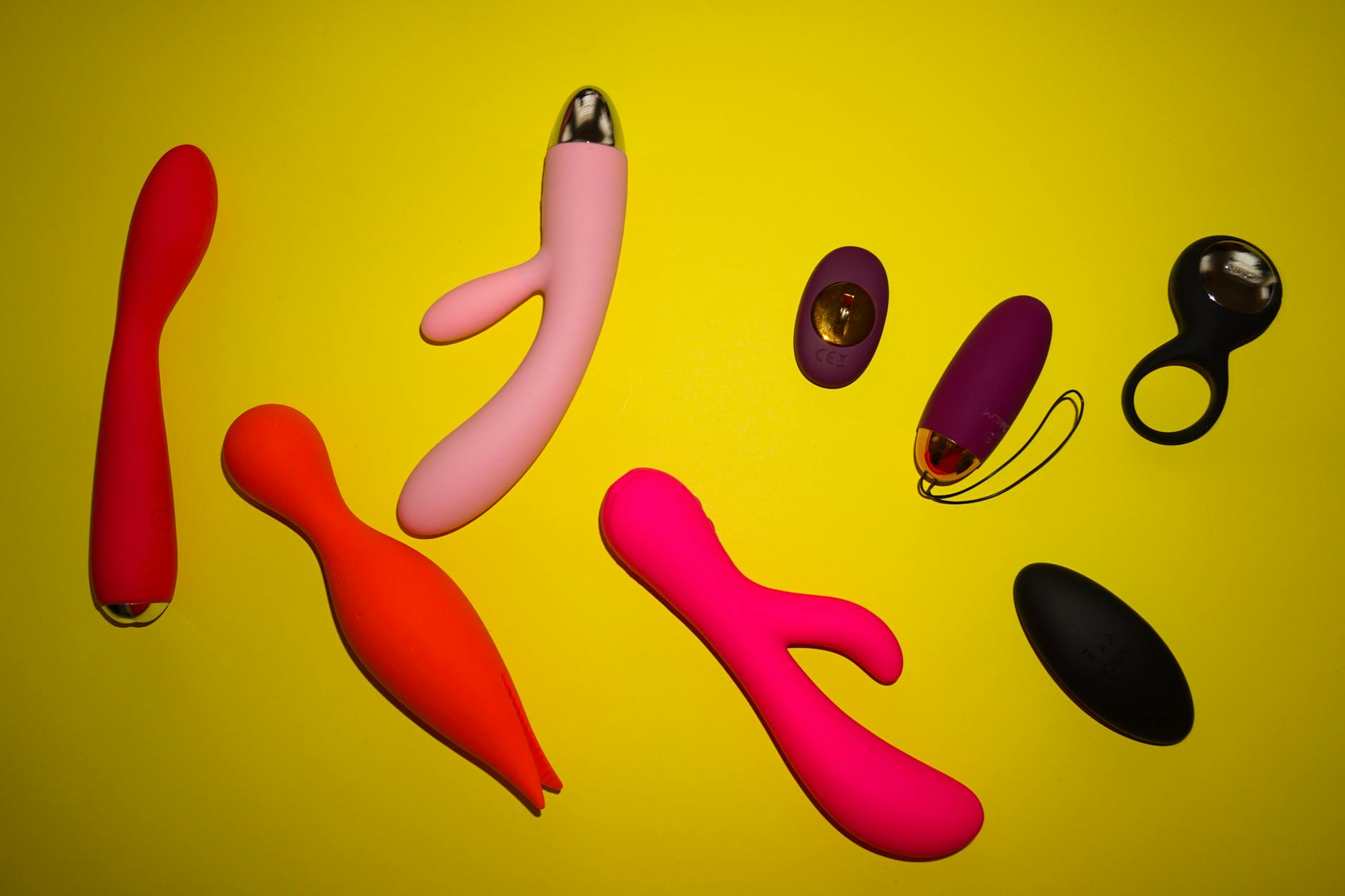
The foreplay gap is real, and it's not your fault
Let's be real. You're lying there, your partner is already in the mood, and they're moving directly to penetration while you're still somewhere in the warm-up zone. Foreplay gets squeezed or skipped entirely. It happens in relationships where time is tight, where one person has a faster arousal curve, or where the rhythm just hasn't been negotiated clearly enough.
Here's the thing though: you don't need foreplay to magically appear. You need arousal to happen on your terms, which is where a clitoral vibrator becomes your actual solution.
Why foreplay gets rushed in the first place
Most people don't wake up intending to skip foreplay. The reasons are usually practical: different libido levels, time constraints, work stress, or one partner genuinely not understanding that clitoral arousal takes longer to build than penetrative arousal. Some partners also learned sex in a way that skipped the concept of mutual warm-up entirely. None of that is malicious. It's just a gap in information or timing.
When lemon vibrators enter the picture, you're not waiting for someone else's process anymore. You're independent in your own arousal, which changes the entire dynamic of the interaction.
How clitoral vibrators solve the foreplay problem
A lemon clitoral vibrator does three things foreplay often doesn't:
It's immediate. Suction-based devices like the Lem work fast because they're designed to stimulate the nerve-rich clitoral area with precision. You're not building arousal passively. You're actively generating it. Most users report noticeable sensation within 30 seconds to 2 minutes.
It's controllable. You decide the pattern, intensity, and rhythm. You're not syncing to someone else's speed or waiting for them to figure out what works. The Lem has multiple patterns precisely for this reason. You know what gets you there.
It removes the pressure dynamic. When your partner isn't contributing to foreplay, the weight of "getting aroused fast enough" can land squarely on you. Using a vibrator shifts that. You're taking responsibility for your own pleasure, which paradoxically removes performance anxiety and makes arousal easier.
The practical mechanics of using a lemon vibrator when foreplay is sparse
Timing matters here. You have a few options depending on your comfort and your relationship dynamic.
Option 1: Use it before your partner is ready. If you know foreplay will be minimal, you can start stimulation solo 10 to 15 minutes before you expect partnered activity. This gets you aroused and ready without waiting for them. By the time you're together, you're already at a good baseline.
Option 2: Use it while you're together, before penetration. Integrate it into your time together openly. Your partner can watch, touch you elsewhere, or do something for their own arousal while you use the vibrator. This turns it into shared time rather than solo time.
Option 3: Use it during penetration for dual stimulation. This is where it gets really practical. Many people find that clitoral vibration during penetration feels incredible and also helps them reach orgasm faster, which is genuinely useful if your partner has a shorter refractory period or you're working with time limits.
What to say to your partner about this
This is the part people get nervous about. Here's what I recommend: frame it as collaboration, not criticism.
Instead of: "You never do foreplay and it's frustrating."
Try: "I'd like to use a vibrator when we're together because it helps me feel better. Would you be open to that?"
The second framing is honest without blame. You're telling them what you want and what helps you, not accusing them of failure. Most partners are relieved. It often takes pressure off them. They don't have to wonder if they're doing foreplay "right." You've got a tool that works.
If resistance comes up, that's a separate conversation about partnership, but I'll say this: when someone refuses to let you use a tool that brings you pleasure, that's useful information about how they value your satisfaction. A lemon vibrator isn't a threat to partnership. It's the opposite. It's you taking responsibility for your own pleasure, which is the foundation of healthy sex in relationships.
The arousal science behind why this actually works
When foreplay is abbreviated, your body doesn't reach the same state of vasocongestion and neural activation that longer warm-up provides. Clitoral vibration bypasses some of that by directly activating pleasure pathways. The suction mechanism in particular stimulates a broader area than focused vibration alone, which is why many users prefer clitoral suction devices when they need fast, reliable results.
Your vaginal lubrication, clitoral swelling, and neural readiness all accelerate with targeted stimulation. This isn't you forcing yourself. This is you using the right tool for the job.
When this is a symptom of a bigger issue
I need to be honest about one thing: if foreplay is being skipped because your partner has no interest in your pleasure at all, that's not a vibrator problem. That's a relationship problem. A lemon vibrator can help you meet your own needs, but it can't fix a partner who consistently dismisses your satisfaction.
There's a difference between "foreplay sometimes gets rushed because we're busy" and "my partner is selfish about my orgasm." One is a friction point you can solve with tools and communication. The other is a values mismatch that needs deeper work, possibly with a couples therapist.
Use this article to assess which one you're actually dealing with. If your partner is genuinely trying and just has a different sexual rhythm, a vibrator solves it beautifully. If your partner doesn't care whether you feel good, that's the actual conversation to have.
How to build the conversation about shared pleasure
Introduce the vibrator as part of a bigger conversation about pleasure, not as a workaround to a problem.
Try something like: "I've been thinking about how we could both feel better during sex. I want to explore using a vibrator sometimes because I think it would help me enjoy things more. Would that work for you?"
This opens it up as a collaboration. Maybe your partner gets curious. Maybe they want to help you use it. Maybe they want to use one too. The point is you're moving from a scarcity mindset ("You're not doing enough foreplay") to an abundance mindset ("How can we both feel amazing?").
Lemon clitoral vibrators exist partly because the conversation about female pleasure has evolved. You're not supposed to wait passively for arousal anymore. You're supposed to be an active participant in your own satisfaction. That's not selfish. That's healthy.
People also ask
Is it normal for partners to skip foreplay?
Yes. It's incredibly common. Different people have different arousal timelines. Some people need 15 minutes of buildup. Others are ready in 2 minutes. When partners have mismatched arousal curves, foreplay often gets compressed or skipped because one person is ready before the other. That's not a character flaw. It's a rhythm mismatch that communication and tools solve.
Will using a vibrator make my partner feel inadequate?
It might, initially, if they already have insecurities about sex. But here's the reframe: you're not replacing them. You're using a tool that does one specific thing really well. A vibrator can't hold you, look into your eyes, or provide emotional intimacy. It's a device. Many partners actually feel relieved because it removes pressure from them to be everything at once.
How do I bring up wanting to use a lemon vibrator without making things weird?
Normalize it. Talk about it the way you'd talk about wanting to try a new restaurant or a different position. "I've been curious about using a vibrator together. Would you want to try it?" If you act like it's normal, they're more likely to respond as if it is. Shame makes things weird. Casual honesty doesn't.
Can I use a clitoral vibrator if I've never used one before?
Absolutely. Start on a lower setting if the device has multiple patterns. Explore what feels good. Many people are surprised by how quickly they figure out their preferences. If you're using it for the first time with a partner present, that's fine too. You're learning together.
What if my partner thinks vibrators are "too much" or "not natural"?
Then they think your pleasure is less important than their ideas about naturalness, which is worth examining. Sex isn't a test of authenticity. It's an interaction between people who want to feel good. If vibrators existed 200 years ago, people would have used them. Technology is just making it easier.
How often should I use a vibrator if my partner isn't interested in foreplay?
As often as you want. There's no number that's "too much." Some people use vibrators multiple times a week. Others use them occasionally. This is your pleasure. You get to decide the frequency.
The real win here
The deepest benefit of using a lemon clitoral vibrator when foreplay feels rushed isn't just that you orgasm faster. It's that you stop waiting for permission to feel good. You take responsibility for your own arousal. You show your partner what you like. You make sex an active conversation instead of a passive experience.
That changes everything. Not just sexually, but in how you show up in the relationship. When you know what you want and you're willing to ask for it, that's power. That's health. That's a partnership that works.
If you're ready to explore, reach out to Nancy Lem or browse our collection of clitoral vibrators designed for exactly this. Your pleasure matters. Full stop.