The silence is the hardest part
Honestly, bringing up toys with a partner feels riskier than it actually is. You're not introducing something that will replace them. You're introducing something that might unlock parts of the experience you've both been missing. And yet. The fear sits there: "What if they think I'm not satisfied?" "What if they feel threatened?" "What if I just sound weird?"
Here's what I've learned from years of working with couples: the conversation itself is 90% of the work. Once you actually say the words out loud, the intensity drops completely.
Why this conversation matters more than you think
Lemon vibrators and other clitoral toys aren't about fixing a broken dynamic. They're about admitting something most couples never articulate: that pleasure is collaborative, that bodies change, and that trying new things together is an act of trust.
Research on long-term couples consistently shows that partners who explore sexual wellness together, whether that's through conversation about what feels good or through using tools like the Lem, report higher satisfaction and deeper emotional intimacy. The act of being vulnerable about desire, of saying "I want to try this," actually strengthens the relationship.
But that only works if the conversation lands right.
The setup: when and where to start
Timing matters. Not because the message changes, but because the recipient's brain is actually listening.
Don't do this during sex. That's too charged and it will feel reactive. Don't do it when you're stressed, when your partner just got home from work, or when you're already frustrated about something else in the relationship. This deserves its own space.
Instead, pick a moment when you're both relaxed and a little removed from daily friction. A walk. A car ride. Sunday morning coffee. Anywhere that feels calm and gives you both an exit ramp if the conversation needs to breathe.
Same goes for context. If you spring this on them out of nowhere, their brain defaults to defensiveness. But if you've been talking more openly about pleasure in general—about what feels good, what you've been curious about, what you've noticed changing in your own body—this becomes part of an ongoing conversation rather than a surprise.
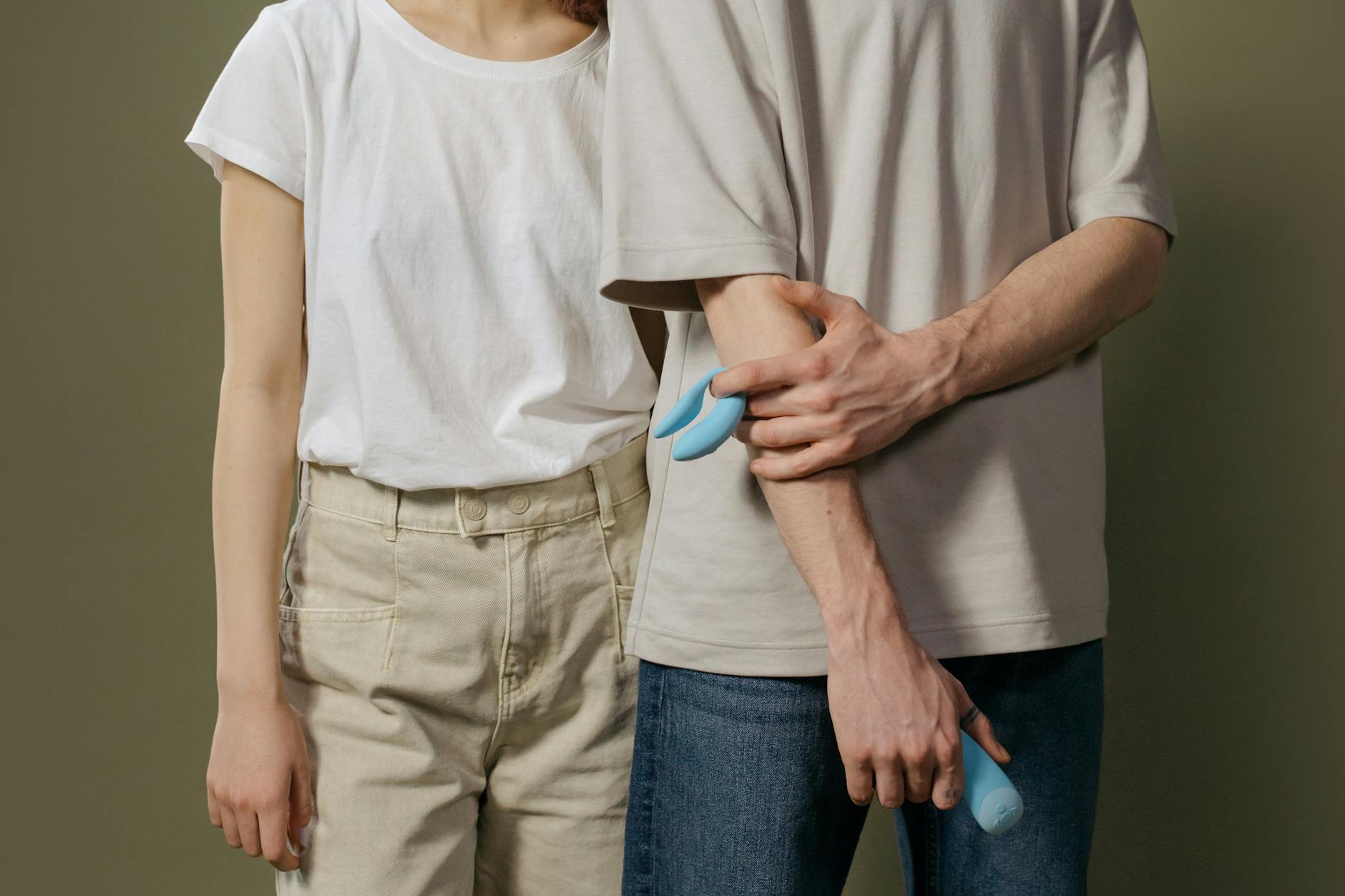
Photo by cottonbro studio on Pexels
The actual words (minus the awkwardness)
You don't need to make a speech. Short, honest sentences do the work.
Start with something true about yourself, not about what's missing: "I've been thinking about exploring more of what feels good to me during sex. I read about clitoral vibrators and I'm curious to try one. I'd love to do this together with you."
That's it. You're not saying your partner isn't enough. You're saying you want to know yourself better, and you want them in the room while you do.
If they ask why, answer honestly. Maybe it's because you've heard good things about lemon vibrators specifically, or the Lem. Maybe you noticed your body responding differently over time and you want to explore. Maybe you're just curious. Any of those answers is valid.
Some partners will light up immediately. Some will pause and need time. Some will ask questions: "Do you think I'm not satisfying you?" "Is this about me?" Be ready for those, and answer them the same way: "No. This is about me wanting to explore more sensation. And I want you here for it."
The resistance and how to move through it
If your partner seems hesitant, don't panic. Hesitation usually isn't rejection. It's fear.
They might worry that a clitoral vibrator means you'll stop wanting their touch. Reality check: a lemon vibrator isn't competing with them. It's creating a different kind of sensation that actually often makes the partner more confident and present, because they're not carrying the entire load of responsibility for your pleasure.
Some partners worry it means you think they're "not enough." This is worth addressing directly. "When I try something new with my body, it's not about you. It's about knowing myself better. And honestly, when I feel more pleasure, that tends to make me want more of you, not less."
Others feel like they're not supposed to want this, that "real" couples don't need toys. That's worth unpacking too, but gently. "I think pleasure is something we both deserve to explore. You'd probably want to know if something made sex feel better for me, right?"
The key is treating their hesitation as information to explore, not as rejection you need to overcome.
Moving from words to action
Once they're on board, the next step is research together. This is actually where a lot of couples reconnect. Looking at options, reading reviews, talking about what appeals to you both, is foreplay.
Consider getting a toy like the Lem together, or browsing what Hello Nancy offers. The act of choosing something as a couple takes the weird edge off entirely. You're no longer hiding something or surprising them. You're collaborating.
Before you use it, show them how it works. Let them hold it, try the settings, understand what it actually is. Demystifying it helps enormously.
Then, the first time you use it during sex, go slow. Let them watch. Let them participate however feels natural. Some partners love holding it. Some love watching. Some want to stay in the background. All of those are fine.
What actually happens next
Most couples report that introducing a clitoral vibrator into their sex life doesn't complicate things. It simplifies them.
Suddenly there's less pressure. You have a tool that does something specific really well, which means your partner can relax into a different kind of touch. You're both less focused on "am I doing this right?" and more focused on what actually feels good.
Conversation opens up too. Once you've crossed that line of saying "I want to try this," it becomes easier to talk about other things. What you like. What you want more of. What you want to try differently.
Most importantly, you've just demonstrated something crucial: that pleasure matters in your relationship. That trying new things is something you do together. That vulnerability is safe.
The people also ask section
What if my partner thinks using a toy means they're not satisfying me?
This is the most common fear, and it comes from a real place. Most people are taught that a partner's pleasure is their responsibility. Using a toy can feel like failure to that person. Here's the frame that helps: a clitoral vibrator isn't replacing your partner. It's doing something specific that hands, bodies, and most traditional vibrators don't do quite as well. It's not a judgment on your partner. It's a tool. Think of it the way you'd think of lube, or a specific position. It's not an insult to their effort. It's an enhancement.
Should I introduce the toy idea or wait for them to?
Whoever brings it up first is actually in the better position. You get to shape the narrative and present it as something you want to explore together, not as a reaction to perceived failure. If you're curious, say so. If you're nervous, say that too. Honesty moves these conversations forward faster than waiting for the right moment that may never come.
What if they say no?
That's their boundary, and it's worth respecting. But it's also worth understanding. Ask them what the hesitation is. Is it cultural? Insecurity? A real preference? Sometimes people need time. Sometimes they need more information. Sometimes they genuinely don't want to. If it's a hard no, you get to decide what that means for you, but don't try to force or manipulate. Resentment will damage the relationship far more than a toy ever could.
Is it better to suggest using it alone first, or together?
Together is almost always better for the first time. It removes mystery and builds trust. You're not hiding. You're inviting them in. If you're nervous, you can absolutely try it solo first to feel confident about how it works, but don't keep that secret. Transparency matters more than perfection.
What if we try it and it feels awkward?
Most couples feel awkward the first time. That's normal. Awkwardness fades. You might laugh. You might feel self-conscious. You might need a few tries before it feels natural. Keep trying. The awkwardness is temporary. The benefit to your pleasure and your connection is lasting.
How do I bring this up if we've been together a long time?
Long-term couples sometimes feel like they "should" know everything about each other already. Actually, you're in the best position to introduce this. You have trust, you have history, you've weathered things together. Frame it as something new you want to explore in this next chapter. "I've been thinking about what we could try to deepen our pleasure together." The length of your relationship is actually an asset here, not a barrier.
The bottom line
The conversation is the hard part. Everything after that is just connection.
When you tell your partner you want to explore your pleasure together, you're not insulting them. You're inviting them deeper. You're saying "I trust you enough to be vulnerable about what I want." That changes the dynamic of a relationship, in the best way.
If you're ready to start the conversation, start simple. Pick a time. Use honest words. And remember: thousands of couples have had this exact conversation and come out the other side with better sex and stronger intimacy. You can too.
Need a place to start your research? Check out our buying guide or explore how clitoral vibrators compare to traditional toys for more information.