Let's talk about what divorce actually does to your sexual self
Divorce doesn't just end a marriage. It often puts your sexuality on pause. You've spent years, maybe decades, having sex in a specific context with a specific person under specific circumstances. Then suddenly that person and that permission structure vanish. What's left isn't always desire. It's often confusion, grief, numbness, or even fear.
Most people don't talk about this part. They talk about dating again, or healing, or moving forward. But the piece in the middle - where you're learning how to want again, and how to pleasure yourself without guilt or performance pressure - that's the hard, invisible work.
Here's what I've learned from decades of working with people navigating this transition: reconnecting with your own pleasure after divorce isn't vanity. It's actually foundational to everything else that comes next.
Why your sexual response feels different (and that's completely normal)
Divorce changes three things at once: your nervous system, your identity, and your access to regular touch. Your brain spent years optimizing for one person's body, one rhythm, one style of initiation. Suddenly that's gone. Even if the sex was mediocre or complicated, your body knew what to expect.
Your nervous system is now in a different state. You might feel more activated - freer, lighter, less trapped. Or you might feel more guarded - less trusting, slower to warm up, more easily triggered by unexpected touch. Both are normal. Both are your system adjusting to a massive life shift.
And there's identity. A lot of people don't realize how much of their sexual self was tied to being a spouse. You had a role, an audience, an assumption of availability. Now you're just... you. That's exhilarating and terrifying. Some people find that reclaiming solo pleasure feels like the first genuinely selfish thing they've done in years. That's not a red flag. That's a needed reset.
The emotional work comes first
Before you reach for any tool - including a lemon vibrator - check in with what's actually happening in your body and mind. Are you using pleasure to avoid grief? That's common, and not inherently bad, but it helps to know. Are you trying to prove something to yourself or an ex? Also common. Are you genuinely curious about your own body in a new way? That's the green light.
I usually recommend three weeks of solo time before bringing a vibrator into the picture. Not because you can't masturbate - you absolutely can and should. But because noticing what your body can do without external stimulation gives you a baseline. Can you reach orgasm on your own? How long does arousal typically take? What thoughts distract you? What actually feels good versus what you think should feel good?
Write this down if it helps. This isn't journaling for healing. It's data collection about your own pleasure.
When and how to introduce a lemon vibrator
A lemon clitoral vibrator is useful after divorce for a specific reason: it removes the performance element entirely. There's no partner watching. There's no one else's pleasure to manage. There's just you, your body, and a tool designed to stimulate without judgment.
The suction design of a Lem works particularly well during this phase because it's gentler than traditional vibration. If your nervous system is still hypervigilant or easily overwhelmed - which it often is post-divorce - direct, intense vibration can feel intrusive. Suction feels more like a sustained rhythm, almost like breathing with your body.
Here's my actual protocol:
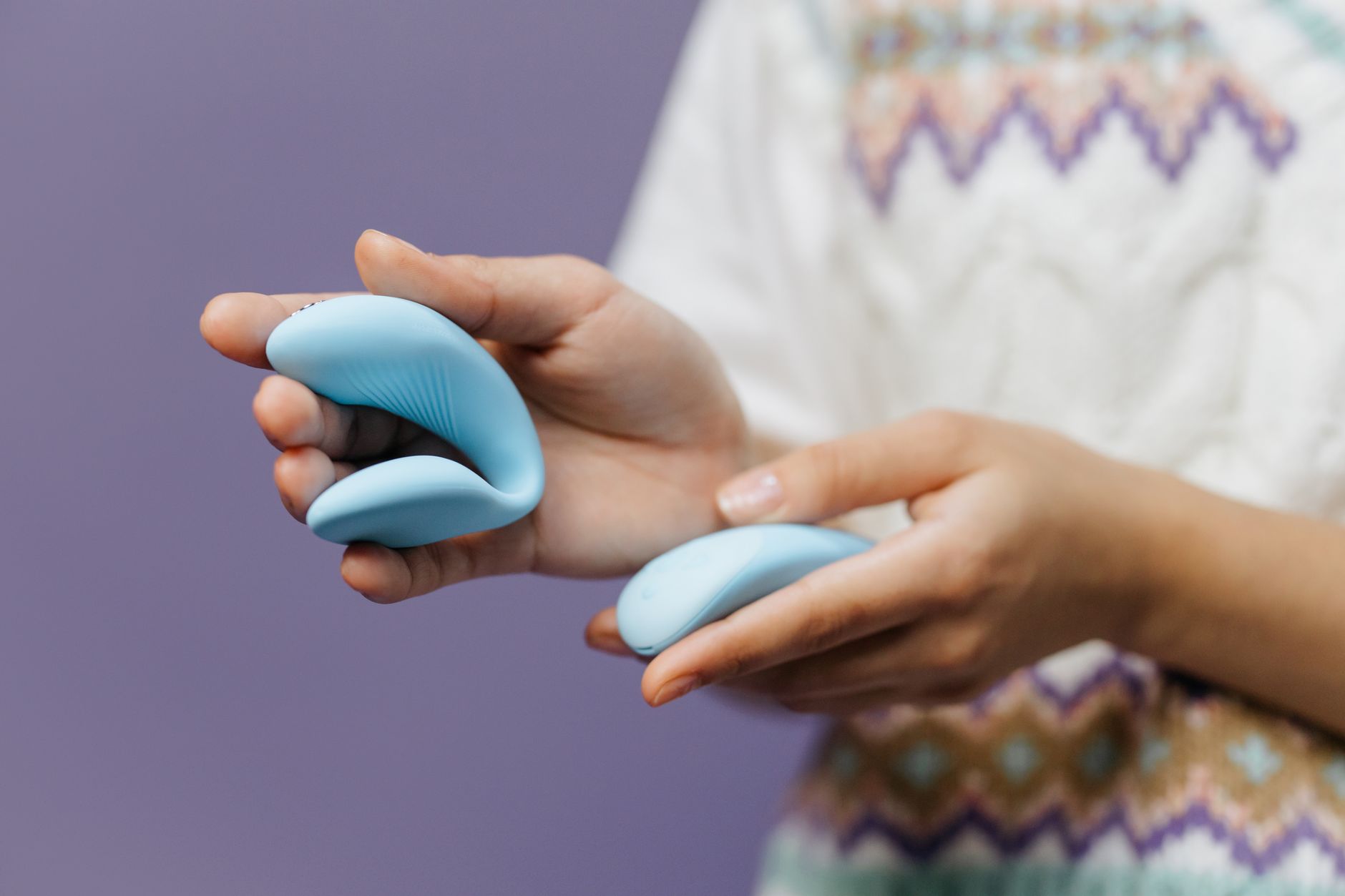
Week one: just holding it. Unwrap it, charge it, sit with it in your hands. Get used to the weight and texture. This might sound silly, but trust me - reconnecting with your own pleasure after divorce means slowly rebuilding comfort with tools of pleasure. Don't use it yet. Just become familiar.
Week two: external touch without turning it on. Apply it to your outer labia, your inner thighs, the space just above your clitoris. Feel the silicone texture. Notice temperature. This isn't about arousal yet. It's about desensitizing the "stranger danger" feeling that often comes with new objects touching your body.
Week three: turn it on, lowest setting, outer areas first. Start with the gentlest suction pattern (usually pattern 1 or 2 on a Lem). Keep it on your outer labia for 10-15 minutes. You don't need to orgasm. You're relearning what intensity feels manageable.
Week four: you know your preferences now. From here, you can experiment with intensity, duration, and direct clitoral contact. You've already rebuilt some baseline confidence.
Handling the guilt and the weird feelings
A lot of people feel guilty using a vibrator after divorce. Guilt about spending time on themselves. Guilt about pleasure when they're still processing loss. Guilt about the cost. Guilt about the mess of failed marriage sitting nearby while they're being intimate.
Here's what I want to be really clear about: those feelings aren't moral failings. They're symptoms of a nervous system that spent years in an interdependent structure. The guilt will fade if you don't feed it stories about what it means.
Using a lemon vibrator to reconnect with your pleasure isn't selfish. It's not a betrayal of your marriage. It's not proof that the marriage was bad. It's literally just your body learning how to feel good again, separate from anyone else.
If guilt is really loud, permission often helps. Say it out loud: "I deserve to feel good. This is for me. This is allowed." Sounds simple, but your nervous system believes words.
Integrating this into a new sexual life (if and when you want that)
If you eventually date again, knowing your own pleasure has massive practical benefits. You know what speeds you up and what slows you down. You know what patterns feel good. You know whether you need 5 minutes or 30. This information makes you a better partner because you're not expecting someone else to guess or figure you out.
Many people I work with find that solo pleasure practice actually makes partnered sex feel less fraught. You're not relying on your partner for 100% of your pleasure anymore. You know you can access satisfaction alone. That takes an enormous amount of pressure off the relationship.
You can also introduce a lemon vibrator into partnered sex when you're ready. Some people use it during foreplay. Some use it during intercourse for additional stimulation. Some use it while their partner touches them elsewhere. There's no template. You get to write this one.
When to reach for the Lem and when to just take a break
There's a rhythm to post-divorce healing that isn't linear. Some weeks your sexual energy will feel abundant. Other weeks it'll vanish. Both are normal. A lemon vibrator is a tool for when you want to access pleasure, but it's not medicine for when your nervous system just needs rest.
If you find yourself reaching for it compulsively - using it to avoid feeling things or to manage anxiety - that's worth noticing. Pleasure should feel generous and curious, not frantic. If it feels frantic, taking a week off is usually smarter than pushing through.
Likewise, if pain appears - either internal or external - don't push through. Post-divorce bodies sometimes hold tension in unexpected places. A good pelvic floor physical therapist can help identify what's going on. When pain appears during solo or partnered sex, addressing it early makes everything easier down the line.
The reconnection happens slowly
You won't use a lemon vibrator once and suddenly feel whole again. That's not how this works. Reconnecting with your sexual self after divorce is a gradual, nonlinear process. Some sessions will feel amazing. Some will feel neutral or uncomfortable. Both are data.
What matters is that you're showing up for yourself. You're willing to feel what your body feels without judgment. You're prioritizing your own pleasure as something that matters. After years in a structure that often requires compromise and accommodation, that's revolutionary.
Your sexual self didn't disappear in divorce. It's just dormant, waiting for you to remember that pleasure - on your own terms, in your own timeline - is a right, not a luxury.
Frequently asked questions
How soon after divorce can I use a vibrator?
There's no universal timeline, but emotionally, most people benefit from waiting until the initial shock has worn off. That's usually 2-4 weeks. Neurologically, your nervous system is still in high alert mode during acute grief. Once you're sleeping slightly better and can go an hour without thinking about the divorce constantly, your body is probably ready to explore pleasure again.
Will using a lemon vibrator solo make it harder to enjoy sex with a partner later?
No. If anything, the opposite is true. Knowing your own pleasure makes partnered sex easier because you're not dependent on someone else to figure you out. You also have baseline data about what works, so you can communicate more clearly with future partners.
I feel shame about wanting pleasure after my marriage failed. Is that normal?
Completely normal. Divorce often comes with a narrative that goes something like "I failed" or "I chose wrong" or "I'm broken." Your body connecting that shame to pleasure is your nervous system trying to protect you. But your body working well isn't evidence that you're bad. It's just your body working. Separating those narratives takes time, but it's possible.
Should I tell my kids I have a vibrator?
No. Your sexuality and your parenting are separate domains. Store it somewhere secure, use it when you have privacy, and don't make it a household topic. Kids don't need to know about adult sexual tools, just like they don't need to know about your relationship with an ex-partner.
What if using a vibrator feels weird or uncomfortable at first?
That's really common. Your body might feel guarded after divorce. Start slower than you think you need to. Spend time just holding the lemon vibrator without using it. Let your nervous system adjust gradually. Comfort builds over weeks, not days. There's no rush.
Can a lemon vibrator help with vaginal dryness after emotional stress from divorce?
Indirectly, yes. Stress and anxiety reduce natural lubrication. Using a lemon vibrator with water-based lubricant can help rebuild the habit of arousal and also provide the physical stimulus that increases blood flow to the area. If dryness persists, addressing it with a healthcare provider is worth doing because persistent dryness sometimes signals that your stress response is stuck in overdrive.
Divorce reshapes your life, but it doesn't end your capacity for pleasure. Reconnecting with your body after marriage dissolves is one of the gentlest acts of self-care available. A lemon vibrator is just a tool to make that reconnection easier. The real work is deciding that your pleasure matters, and then slowly, patiently, letting yourself remember why it does.