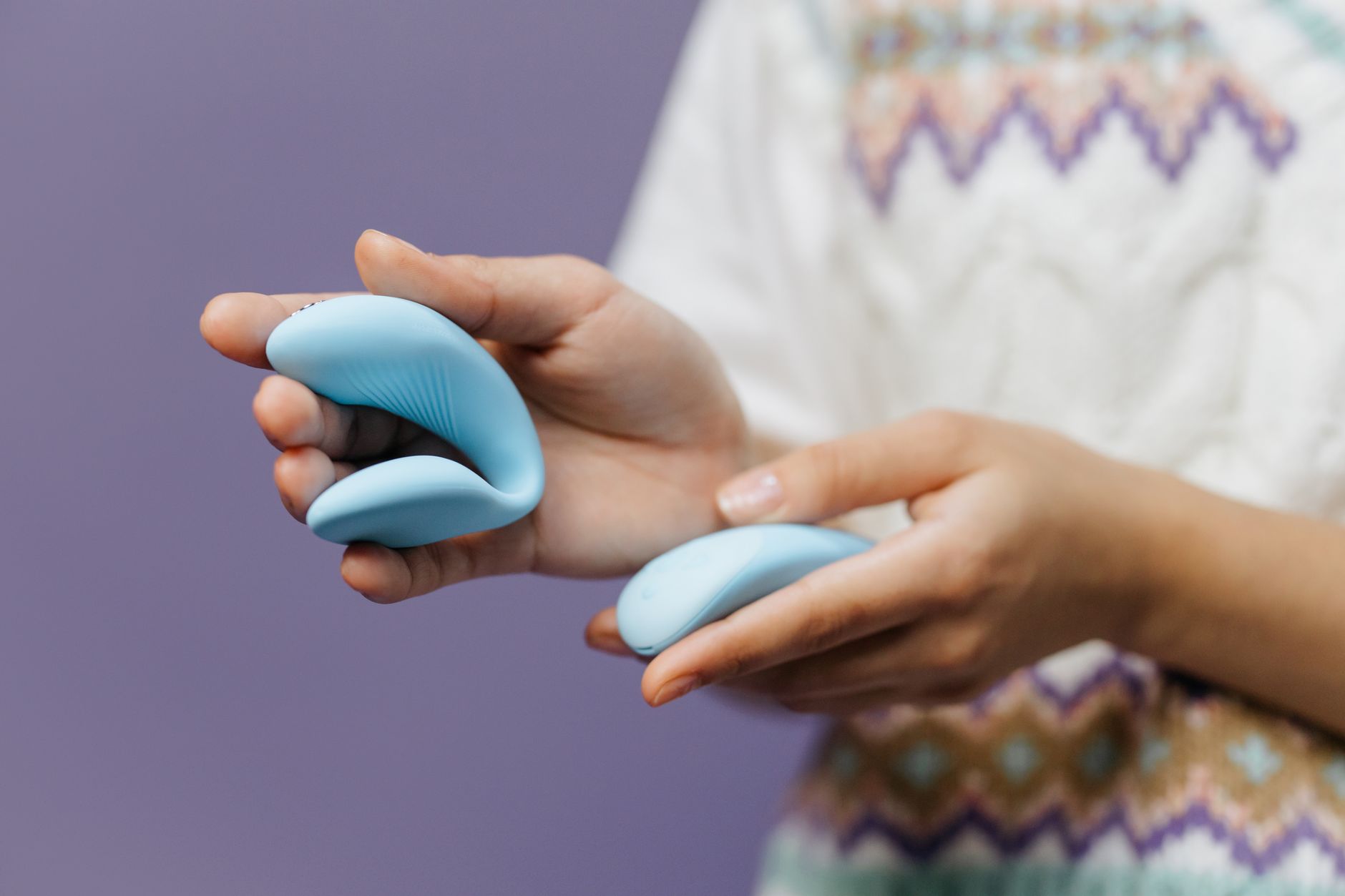
How to Use a Lemon Vibrator During Perimenopause and Hormonal Transitions
Let's be real: perimenopause is messy. One month your body responds like clockwork. The next month, arousal takes twice as long to build, sensitivity shifts without warning, and you're wondering if your favorite vibrator suddenly stopped working. Spoiler alert: it didn't. Your hormones did.
Here's the thing about perimenopause and pleasure. Most of what you read focuses on drying up and declining desire. But the actual experience is more nuanced. Yes, hormone fluctuations change how your body responds to stimulation. But they don't diminish your capacity for pleasure if you know what's happening and how to work with it instead of against it.
I've worked with hundreds of people navigating this transition, and the ones who adapt their approach consistently report that their clitoral vibrator experience improves dramatically once they understand the why behind the change.
What perimenopause actually does to arousal
Perimenopause typically starts in the mid-40s, though it can begin in the late 30s. During this phase, your ovaries gradually produce less estrogen and progesterone. It's not a switch that flips at 50. It's a dimmer that gradually lowers over 5-10 years. This matters because gradual doesn't mean predictable. Some months your hormones climb and settle smoothly. Other months they swing wildly.
Here's what those swings do to arousal and sensation. Estrogen affects blood flow to the genitals and the production of natural lubrication. When estrogen dips, blood flow becomes less consistent, which means arousal takes longer to peak. The clitoris is extremely vascular, so fluctuating blood flow directly impacts how quickly you can orgasm and how intense that orgasm feels.
Progesterone also plays a role. High progesterone can dampen arousal. Low progesterone can sometimes heighten it. Because perimenopause hormones are unpredictable, your responsiveness to even your favorite lemon clitoral vibrator can shift week to week.
The good news: this is temporary and entirely workable. Most people find that once they understand these patterns, they can predict their own arousal windows and adjust their technique accordingly.
Tracking your cycle to predict your arousal patterns
Perimenopause cycles get irregular, but they don't usually disappear overnight. If you still menstruate, you still have hormonal patterns worth paying attention to.
Start tracking two things for four weeks. First, when you bleed (even if it's unpredictable). Second, when you feel most receptive to pleasure. I'm not asking you to journal poetically. Just a note: "Day 5 of cycle, tried vibrator, took 20 minutes to reach orgasm" or "Skipped a cycle this month, arousal felt flat."
Within a month, patterns emerge. Many people find they're most responsive in the week after their period. Others notice responsiveness peaks mid-cycle, even if their cycle is irregular. Some find that skipped cycles correlate with lower arousal for that entire month.
Once you see your pattern, you can stop fighting it. If you know Week 2 of your cycle is your high-arousal window, that's when you schedule solo pleasure time. That's when your lemon vibrator will feel most effective. If you know Weeks 3-4 are flatter, you know to allow more warm-up time and lower intensity settings.
This removes so much frustration. You stop thinking "my vibrator isn't working" and start thinking "okay, this is a low-arousal week. I need a longer warm-up." The shift is small. The impact is enormous.
How to adjust your lemon vibrator technique for lower arousal weeks
A lemon clitoral vibrator like the Lem works through suction and gentle pulse patterns. It's particularly forgiving during hormonal transitions because it doesn't require the same kind of direct friction that traditional vibrators do. But even the best clitoral vibrator needs technique adjustment when your arousal patterns are shifting.
Here are the practical changes I recommend during low-arousal weeks:
Start with lower intensity settings. The Lem comes with pattern options. During high-arousal weeks, you might jump straight to pattern 5. During lower weeks, start at pattern 1 or 2. This isn't failure. This is meeting your body where it actually is. Arousal is cumulative. Pattern 1 for five minutes, then Pattern 2, then Pattern 3. You're building a chain reaction, not forcing one.
Extend your warm-up time by 10-15 minutes. Many people assume they need more intense stimulation during low-arousal weeks. Actually, they need longer stimulation. Use external touch, breathing, fantasy, or even written erotica for the first chunk of time. Then introduce your lemon vibrator when you're already partially aroused. You're meeting it halfway.
Use lube even if you don't usually need it. During perimenopause, natural lubrication becomes less consistent. A water-based lube isn't a sign something's wrong. It's a tool. Apply it generously around the entire area, not just directly where your vibrator touches. This reduces friction resistance and makes arousal easier.
Change your touch pattern. If you usually place the lemon vibrator directly over the clitoris, try holding it slightly off-center. During fluctuating hormones, clitoral sensitivity can feel uneven. Moving the vibrator 2-3mm in any direction sometimes finds the sweet spot faster. Experiment. There's no "correct" placement.
The weeks when arousal feels heightened
Perimenopause isn't all low-arousal valleys. The peaks can actually feel more intense than pre-perimenopause arousal, because the contrast is sharper.
During high-arousal weeks, most people can dial up intensity right away. But here's where people actually struggle: they lean too hard into the peak weeks and ignore the flat weeks, which creates a boom-bust cycle that's genuinely exhausting.
Instead, use your high-arousal weeks to understand your body's full spectrum. Experiment. Try higher intensity settings on your lemon vibrator. Try longer sessions. Explore what happens when you layer sensations (vibrator plus manual touch, for instance). But also notice what feels good that isn't just about intensity.
Often people discover during perimenopause that their most satisfying orgasms don't come from maximum intensity. They come from patience, variety, and building arousal gradually. This is useful information. Store it. Because you'll need it during the next low-arousal week.
When to bring your partner into the adjustment
If you have a partner, this transition is worth naming directly. Not because something's broken. Because this is a temporary recalibration period, and your partner benefits from knowing it.
Many partners assume a shift in arousal means their partner is less attracted to them. That's rarely true. It's hormones. It's biology. But if you don't explain it clearly, resentment builds silently.
Have this conversation outside the bedroom. Say something like: "My arousal patterns are shifting right now because of hormonal changes. Some weeks I need a longer warm-up. Some weeks I'm ready faster. This doesn't mean I'm less interested in you. It means my body is going through a transition, and I'd like us to adjust together." Then actually adjust together. If you know Week 2 is your high-arousal window, build date nights or intimate time around that. If you know Weeks 3-4 are flatter, that's not a rejection. That's just when solo pleasure time with your lemon vibrator might be more satisfying than partnered sex.
Partners who understand this report feeling less anxious. People navigating perimenopause report feeling less isolated. That's the win.
When to layer your vibrator with other tools
Sometimes your lemon clitoral vibrator is the only tool you need. Sometimes it's part of a combo. During perimenopause, layering becomes more useful.
A few combinations that work well during hormonal transitions. Your lemon vibrator plus a penetrative toy can intensify orgasms even when clitoral arousal is slower to build. Manual touch to the inner thigh or breast while using your vibrator can increase overall arousal. Some people find that breathwork or fantasy combined with vibrator use actually creates more intense sensation than vibrator-alone during lower-arousal weeks.
The why is worth understanding. During perimenopause, single-channel stimulation sometimes feels blunt. Multi-channel stimulation feels more dynamic. You're engaging more nerve pathways, so pleasure feels richer even if the intensity is lower.
This isn't about needing more. It's about engaging differently.
Timing and the perimenopause sleep factor
One detail that rarely gets mentioned: perimenopause often messes with sleep. And sleep quality directly impacts arousal quality.
When you're running on poor sleep, your nervous system is already depleted. Your body has less capacity to build sustained arousal. So pleasure sessions that work beautifully on a well-rested week fall flat on a sleep-deprived week.
This isn't a failure of your lemon vibrator. It's your nervous system running on fumes.
If you're experiencing perimenopause insomnia, solo pleasure time actually becomes more valuable. It helps regulate nervous system function and can sometimes improve sleep quality when you time it right. But manage expectations. A pleasure session after three nights of poor sleep won't feel the same as a pleasure session after solid rest. Work with that. Your lemon clitoral vibrator will still deliver. It just might need longer warm-up or lower intensity. Same adjustment as low-arousal weeks.
Knowing when hormonal shifts become a clinical concern
Some perimenopause transitions are physiologically normal. Some warrant medical attention.
If arousal completely disappears for months at a time, not just weeks, that's worth mentioning to a doctor. If you experience actual pain during pleasure (not discomfort or unusual sensation, but pain), that's worth investigating. If you suddenly have zero lubrication despite using lube, that sometimes signals a thyroid issue or other metabolic shift that a clinician should know about.
Here's the thing: medical support during perimenopause exists. Hormone therapy, targeted supplements, sometimes other interventions. Not everyone wants or needs them. But if your perimenopause is making pleasure consistently difficult, you deserve support. Your pleasure matters. Getting help accessing it is reasonable.
If you're considering support, bring it to someone familiar with sexual health, not just general gynecology. The difference is huge.
FAQ
How long does it usually take for arousal to return to normal after a skipped or irregular cycle during perimenopause?
There's no standard timeline because perimenopause cycles are inherently non-standard. Some people regain normal arousal patterns within a week after an irregular cycle stabilizes. Others notice the shift gradually over two to three weeks. The best approach is tracking what happens for you specifically. Once you notice your own pattern, you stop guessing and start adapting.
Can I still use my lemon vibrator on the highest intensity setting during perimenopause, or do I need to stay on lower settings?
Absolutely use higher settings when your arousal is at its peak. The goal isn't to permanently stick to lower intensities. It's to match your tool to your body's current state. High-arousal weeks? Use whatever setting feels right. Low-arousal weeks? Start lower and build up. You're not limited. You're being responsive.
Does using a lemon clitoral vibrator more frequently during perimenopause help rebuild sensitivity faster?
Sometimes. Regular pleasure practice does help maintain clitoral sensitivity and blood flow. But more isn't always better. Exhaustion from frequent high-intensity stimulation can actually flatten arousal. The goal is consistent, varied pleasure, not maximum frequency. Two to three sessions a week of varied intensity, spread throughout the month, often produces better results than daily intensity.
Should I use my lemon vibrator differently during perimenopause if I'm also taking hormone therapy?
Hormone therapy stabilizes your hormonal fluctuations, which typically makes arousal more consistent and predictable. You'll likely notice that the dramatic week-to-week shifts flatten out. That means your usual vibrator technique probably returns faster. But everyone's body responds differently to hormone therapy. Track your own experience. Some people find their arousal peaks higher once stabilized. Some find it levels to a middle ground. Adjust your vibrator use based on what actually happens, not what you expect.
Can perimenopause cause clitoral numbness that a lemon vibrator can't improve?
True clitoral numbness during perimenopause is rare. What's more common is uneven sensitivity or a temporary blunting of sensation during lower-arousal weeks. A lemon vibrator often helps because suction-based stimulation engages nerve pathways differently than direct vibration. If numbness persists across multiple cycles or doesn't respond to longer warm-ups and technique adjustments, mention it to a healthcare provider. Sometimes it signals a medication interaction, thyroid issue, or nerve-related concern worth investigating.
Is it normal for my orgasms to feel different during perimenopause, even with my lemon vibrator?
Completely normal. Perimenopause orgasms often shift in intensity, location, or duration. Some people describe them as more centered. Some describe them as subtly different in texture or depth. This isn't damage. This is transformation. Most people adjust to the new sensation within a few cycles and find it equally satisfying, just different. If the difference feels concerning rather than just different, bring it up with a healthcare provider.
Moving forward with confidence
Perimenopause isn't a pause in your sexual life. It's a recalibration period. Your body is genuinely changing, which means your approach needs to change too. That's not a limitation. It's an opportunity to understand yourself more deeply.
The people I work with who navigate perimenopause most successfully are the ones who stop fighting their hormones and start working with them. They track their patterns. They adjust their technique. They communicate with their partners. They use tools like lemon clitoral vibrators intentionally instead of hoping the same approach will work every week.
Your pleasure matters during perimenopause just as much as it did before. It might just require a bit more intentionality. And honestly, that's not a bad thing. For more on how different life phases affect pleasure, check out our guide on how to use a lemon vibrator for better orgasms over 40.
If you're navigating relationship changes alongside perimenopause, you're not alone. Many couples find that open communication about these shifts actually strengthens their connection. Our piece on how to use a lemon vibrator for couples pleasure with mismatched desire walks through exactly how to have those conversations.
Your body is capable of extraordinary pleasure during every phase of life, including perimenopause. You've got the tools. You've got the information. Now it's just about paying attention to what your body actually needs and giving it that.