When you stop birth control, your body wakes up
Let's be real. Quitting hormonal contraception hits different than you expected. Your cycle returns. Your mood shifts. Your skin does weird things. And your orgasms? They change too. Sometimes better, sometimes flatter, sometimes completely unpredictable for the first few months.
This is not a failure. This is your body recalibrating after months or years of synthetic hormones. Understanding what's happening and knowing how to work with it, not against it, changes everything.
What actually happens to your body when you stop the pill
Hormonal birth control suppresses your natural estrogen and progesterone fluctuation. It keeps everything steady and flat. When you quit, your brain has to restart producing follicle-stimulating hormone (FSH) and luteinizing hormone (LH) all over again. Your ovaries wake up. Your cycle comes back.
But here's what most people don't know: your clitoral sensitivity, genital blood flow, and arousal response don't snap back instantly. They take time. Sometimes weeks, sometimes months. During that adjustment period, you might notice:
- Reduced genital sensation, especially in the first 4-8 weeks
- Slower arousal, even when you're mentally interested
- Orgasms that feel muted or harder to reach
- Increased sensitivity to direct friction (which can go from pleasant to too much)
This is not permanent. And it is absolutely treatable.
Why a lemon vibrator works better than other tools right now
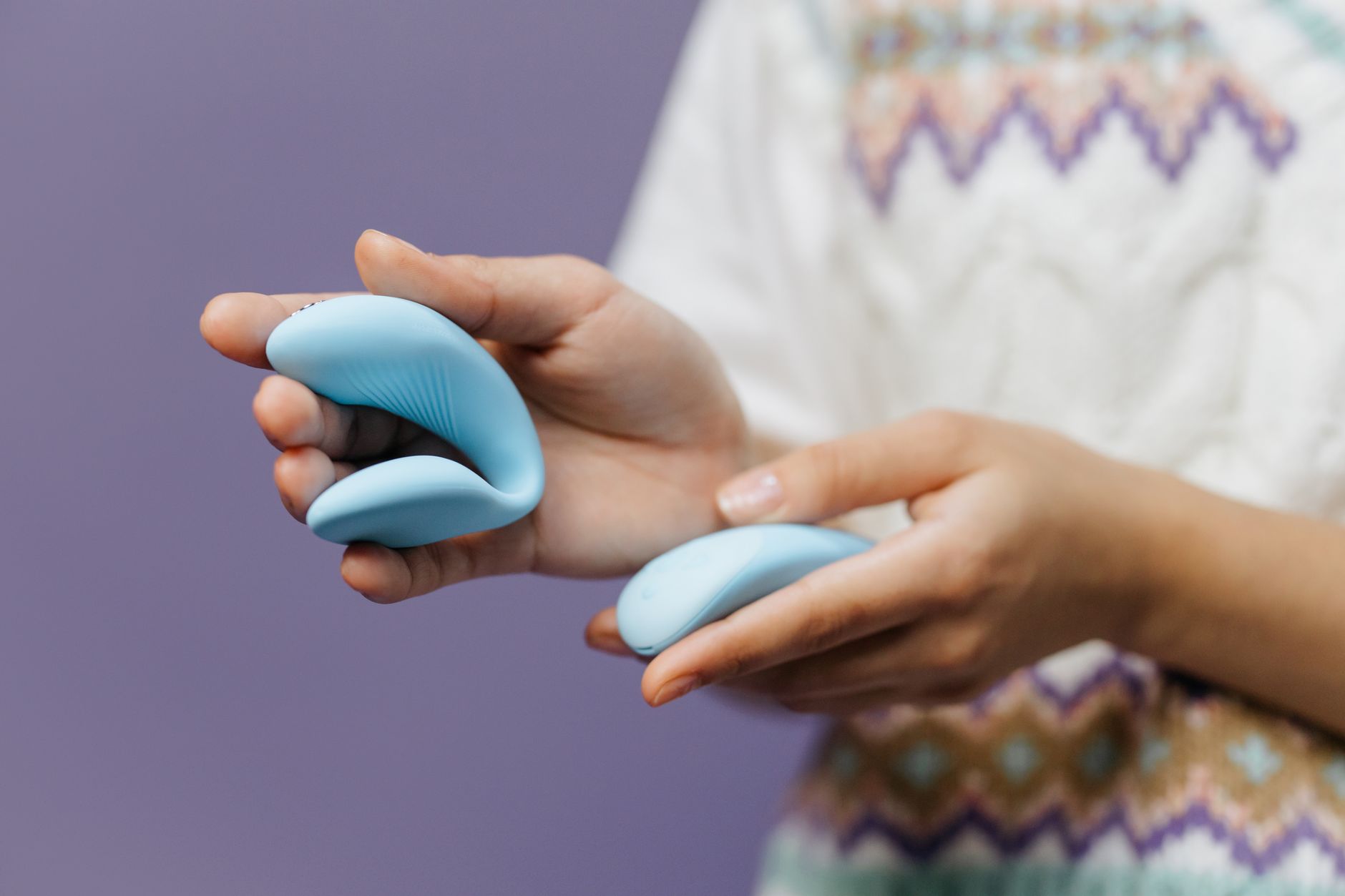
A standard vibrator sends straight-up vibrational force into the tissue. When your clitoris is recalibrating, that can feel overwhelming or numb. A lem vibrator, which uses gentle suction rather than pure vibration, works on different nerve pathways.
Suction stimulates without the mechanical pressure. It creates a gentler, broader stimulus that your tissues can respond to as they're finding their sensitivity again. Think of it as the difference between poking something and creating a gentle pull. Your nerve endings prefer the pull right now.
The Lemon's seven intensity levels also mean you can start where your body actually is, not where you think it should be. Most people coming off hormonal birth control should start at levels 1-3 and work up over weeks. A traditional vibrator doesn't give you that granularity.
The first month: expect recalibration, not results
Your body needs time. The first 2-4 weeks after stopping birth control, your hormones are chaotic. Estrogen spikes, then drops. FSH rises. Your nervous system is adjusting. Trying to force an orgasm during this period is like asking someone to run a 5K when they're still getting their sea legs.
Instead, use the lemon clitoral vibrator for exploration and sensation mapping. Spend 10-15 minutes solo, no pressure to come. Start at level 1 or 2. Notice where you feel sensation. Notice what speed feels good versus what feels like static. This is data. Your body is teaching you what it needs.
Many people report that this exploration phase is actually the breakthrough. You're not chasing an orgasm. You're learning your own body again, which sounds cheesy until you realize you've never actually done it on hormonal contraception.
Months 2-3: your sensitivity starts returning
Around week 4-6, things shift. Your natural hormone production finds a groove. Estrogen begins cycling predictably. Genital blood flow improves. And suddenly, sensation returns.
Now a lemon sucker becomes genuinely powerful. Your clitoris can feel it. Your arousal builds faster. Many people find that orgasms during this phase are actually deeper than they were on birth control, because the whole system is engaged again.
If you're partnered, this is when the tool also becomes valuable for partnered sex. But more on that in a moment.
How to actually use it during each phase
Weeks 1-2: Level 1 only. Ten minutes, no expectations. You're gathering information.
Weeks 3-4: Levels 1-2. If you feel ready, add a drop of water-based lube. The suction will feel more pronounced. Stay curious, not goal-oriented.
Weeks 5-8: Levels 2-3. This is when most people start feeling genuine arousal building. You can lengthen sessions to 15-20 minutes. Many people find orgasm comes more easily now.
Weeks 9+: Levels 3-5. You're back to baseline sensitivity, and often beyond it. The whole range becomes available.
The cardinal rule: if something hurts or feels wrong, stop. Your clitoris is sensitive right now. Listen to it.
The timing within your cycle also matters
Once your cycle returns, you'll notice that clitoral sensitivity fluctuates through the month. During follicular phase (first half of your cycle, after your period), arousal builds faster. During luteal phase (second half), it takes longer. Neither is wrong. Both are normal.
If you're frustrated that orgasms felt easier in week 2 and harder in week 4, it's probably not psychological. It's hormonal. Knowing this means you can adjust your approach instead of blaming yourself. Use the lemon vibrator's lower settings during luteal phase. You'll still orgasm, it'll just take a bit longer.
If you're partnered: how to bring the tool into sex
A lemon clitoral vibrator can become a beautiful addition to partnered sex once your sensitivity returns. But the conversation matters more than the toy.
Many people worry that mentioning a vibrator signals that their partner isn't enough. That's a story, not a fact. The fact is that clitoral stimulation is clitoral stimulation. Your partner's hand, tongue, or the Nancy Lem all do different things. None of them replace each other. They work together.
Start the conversation outside of sex. "My body is adjusting after stopping birth control. I've been exploring with a tool that's helped. I'd love to use it with you when things feel right." That's it. No apology. No long explanation.
When you do use it together, the simplest approach is best: your partner can hold it while you guide the placement, or you can direct them. Some people use it on themselves while their partner is engaged in penetration or other touch. Experiment. There is no correct way.
Why you might not feel effects for a few months
Some people come off birth control and notice changes immediately. Others don't feel any difference for 6-8 weeks. Both are normal. Your hormonal timeline depends on:
- How long you were on hormonal contraception
- The specific formulation
- Your baseline metabolism and hormone sensitivity
- Whether you're managing stress (high cortisol can slow everything down)
If you're at week 4 and still feeling numb, you're not broken. Your body just needs more time. Keep using the lemon vibrator, but manage expectations. This is a marathon, not a sprint.
One thing that helps speed the process along
Honestly? Movement. Aerobic exercise, especially. Cardio increases genital blood flow in real time. Adding 20-30 minutes of running, cycling, or dancing a few times a week can noticeably accelerate sensitivity return. Combined with using the lem vibrator regularly, it's a powerful pairing.
Also: sleep, stress management, and not forcing things. Your nervous system needs permission to rest and recalibrate. Constant pressure to orgasm actually slows the process.
FAQ: Your most common questions
How long does it actually take for orgasms to feel normal again?
Most people report that sensitivity returns fully between weeks 4-12. By month 3, orgasms feel as good or better than they did on birth control. Some people experience this much faster. A small percentage take 4-6 months. All of these timelines are completely normal. Your lemon clitoral vibrator can help during any of them.
Can I still use hormonal birth control again if I want to?
Absolutely. Some people cycle on and off contraception for various reasons. Each time you stop, your body goes through a similar recalibration. The tools and knowledge you gain from this cycle apply to the next one.
Is it normal to have cramping and sensitivity changes at the same time?
Completely. When you stop hormonal contraception, your period often comes back heavier and sometimes more painful at first. Cramping and genital sensitivity changes are part of the same recalibration. Both settle down usually within 2-3 cycles.
Should I use the lemon vibrator during my period?
Yes, if you want to. Some people find that pleasure and orgasm actually help with cramping. Others prefer not to during menstruation. The clitoris doesn't have strong blood flow restrictions during your period the way the uterus does, so it's safe. Do what feels good.
Will quitting birth control affect my desire, not just my sensation?
Possibly. Hormonal contraception can suppress libido in some people. Others experience increased desire when they quit. It varies wildly. Desire changes are slower than sensation changes. Give it 2-3 months before drawing conclusions about your baseline desire.
Can I use a lemon sucker if I have an IUD?
Yes. Your IUD is in your uterus. The lemon vibrator stimulates your clitoris. These are separate systems. No conflict. Some people feel more intense cramping if they orgasm during their period while wearing an IUD, but this is individual. Experiment and notice what your body prefers.
The real thing that changes
Your body after stopping birth control is not broken. It is waking up. A lemon vibrator is not a fix. It is a tool for listening to your own pleasure while you're in this transition. The real work is patience, curiosity, and trusting that your sensitivity will return. The tool just makes the waiting less frustrating.
If you want to explore other nuances of post-contraception sexuality, the article on how lemon vibrators help after quitting hormonal birth control offers complementary perspectives. And if pelvic floor tension is part of your experience, how to use a lemon vibrator when you have pelvic floor tension has actionable guidance for that overlap.
Your pleasure matters. Your body's recalibration is worth the time and attention. And tools like the Nancy Lem exist precisely because this transition deserves better than guessing.