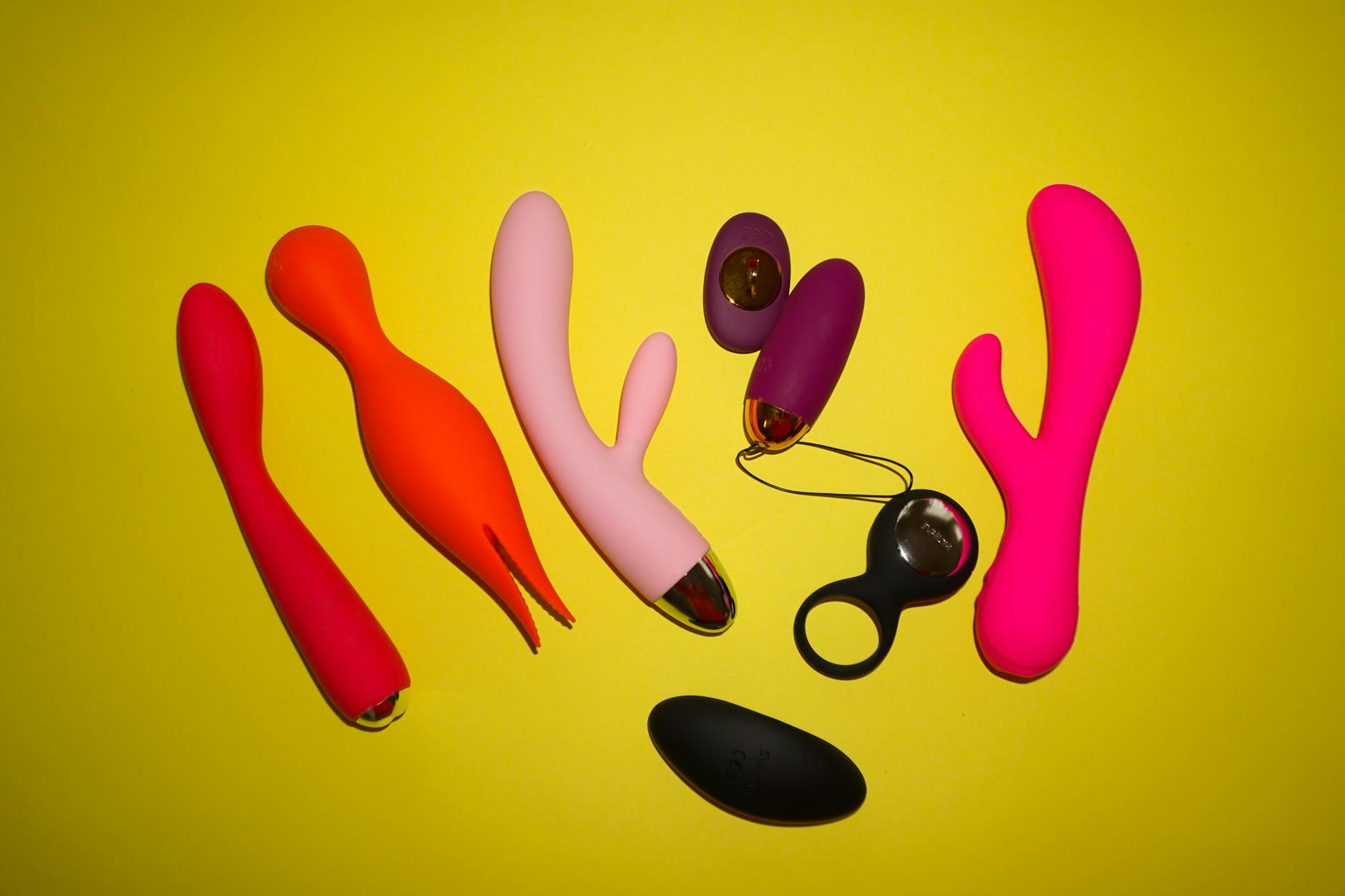
Here's what sensate focus actually does
Sensate focus is one of those therapy techniques that sounds boring on the surface. You take turns touching each other. No goal. No orgasm. Just... touch. The clinical version sounds clinical. But the real version is quietly revolutionary. It's where most couples realize they've been performing sex instead of feeling it.
Most of us learned to have sex around achievement. Did we orgasm? Did it last long enough? Was our partner satisfied? Sensate focus asks you to unlearn that. Instead of a destination, you're on a sensory journey. You notice temperature, texture, pressure, timing. You slow down. You get quiet. And weirdly, that's when a lemon vibrator enters as something unexpected.
Why sensate focus fails without the right tools
The original sensate focus exercises, developed by Masters and Johnson in the 1970s, were designed for couples rebuilding trust after infidelity or sexual dysfunction. They work. But they also work slowly. Some couples report feeling stuck in the "touch but don't excite" phase for weeks. That's fine if you're in intensive therapy. It's less fine if you're trying to rebuild pleasure in the real world alongside jobs, kids, and actual desire.
Here's what I see in my practice. Couples do the exercises. They're present. They're connected. But one or both partners feels mildly frustrated because they're trained to stay in the non-goal zone. It creates a weird tension where presence and pleasure feel like competing objectives.
That's where a lemon sucker changes the entire equation. You're still doing sensate focus. You're still prioritizing presence. But you're not asking your nervous system to shut down arousal. You're inviting it in and exploring what happens when you do that mindfully.
Phase one: sensate focus without the lem vibrator
Start with the traditional practice for one or two sessions. This matters because it sets the baseline. You need to know what "just touch" feels like before you add a tool.
Set a timer for 20 minutes. Take turns being the receiver and the giver. The giver explores the receiver's body with hands, avoiding breasts and genitals for now. You're mapping sensation. The receiver does nothing but feel and notice. No performance. No pressure to react.
After five sessions, most couples report that they've actually felt their partner's touch for the first time in years. That alone is worth the price of admission. You're building presence. You're building attention. You're building the nervous system foundation for what comes next.
Phase two: introducing the lem vibrator slowly
After you've done traditional sensate focus a few times, add the Lem into the mix. Don't start with it on genitals. That defeats the purpose. Instead, use it the way you'd use your hands initially.
The giver holds the Lem (off) and traces it across the receiver's body. Collarbone. Inner wrists. The soft skin on the inner thighs. Notice how the expectation changes. Your body anticipates vibration even when it's not turned on. That anticipation is data.
Then turn it on. Low setting. Keep exploring. Move it slowly. The receiver stays in the noticing space. What does this feel like compared to hands? Where on the body does the sensation feel most intense? Does it pull attention inward or outward?
This phase usually lasts two or three sessions. You're not trying to orgasm. You're trying to understand how a tool changes sensation and presence.
Phase three: lem vibrator and expanding arousal
Once you've spent time with slow exploration, you can let arousal exist in the room without making it the goal.
The receiver is now in charge of where they want the Lem. They can ask for faster or slower settings. They can ask their partner to focus on specific areas. They can use this as a way to show their partner what feels good without any performance pressure.
The giver's job is to stay present and curious. What does your partner respond to? Where does their breathing change? This is actually how you learn your partner's body in a way that goes deeper than years of regular sex.
Some couples find that one session in this phase leads naturally into intercourse. Others spend weeks here, rebuilding pleasure and connection before moving forward. Both are right.
The key is that orgasm, if it happens, is a side effect of presence, not the goal.
Why the lemon clitoral vibrator works in this context
A suction-style vibrator like the Lem is different from traditional vibrators. The sensation comes from air pressure and rhythm rather than direct mechanical vibration. That distinction matters for sensate focus because it creates a different kind of stimulation.
Traditional vibrators can feel somewhat one-note. You turn them on and the vibration is constant. The Lem has patterns. You can adjust intensity. It rewards your attention because slight changes in angle and positioning produce different sensations.
In sensate focus terms, the Lem keeps you engaged and curious rather than checked out and waiting for an orgasm. It asks your nervous system to pay attention, which is exactly what the technique is trying to teach.
Managing expectation in the sensate focus process
Let's be real. Adding a vibrator can make this feel less clinical and more exciting. That's good. But it also sometimes makes one partner feel like "finally we're getting somewhere." If you've been struggling with desire or connection, the Lem can feel like a rescue tool. It's not. It's a guide.
Talk about this explicitly. "I'm curious about using this as part of our sensate focus practice, not instead of it." If one of you is relieved and the other is confused, that's a conversation to have before you start, not during.
Also: sensate focus works best when both partners are curious, not when one is convinced the other is broken. If you're using it to "fix" a partner's low desire or difficulty with orgasm, slow down. There might be something else happening that a vibrator can't touch.
Practical timing and setting
Do this when you're not rushed. Set aside 30 to 45 minutes. Put the phone away. Dim the lights or don't. Create conditions where you can both actually relax.
Lube is your friend, especially if you're using a clitoral vibrator for extended periods. Water-based works best with silicone toys. Have it nearby.
Start with one of you being the receiver. Decide in advance how long the session will be. Then switch. Both experiences matter because they're different. Receiving teaches presence. Giving teaches attention.
When sensate focus with the lem vibrator clicks
Most couples know it's working when one or both of you loses track of time. You're no longer thinking about what you're supposed to be doing. You're just present with what's happening.
Some couples report that pleasure returns to their relationship in this phase. Not because they were broken, but because they'd forgotten how to be together. Others report that patterns that seemed unfixable start to shift. Arguments about sex frequency often dissolve when you're actually connected.
If you're rebuilding trust after an affair or long absence, sensate focus with the Lem gives you a shared experiment. It's not "proving" anything. It's creating new positive experiences together. That matters.
Troubleshooting when it feels stuck
If you're doing sensate focus sessions and they still feel awkward or performance-oriented, pause. Check in with your partner. "What's getting in the way of being present right now?" Sometimes it's anxiety. Sometimes it's unresolved resentment. Sometimes one person's body is holding grief that no vibrator can fix.
If that's the case, a couple's therapist trained in sex therapy can help. Sensate focus is a tool, not a cure-all. But it's one of the most underrated ways couples reconnect because it asks for nothing except attention and curiosity.
If you're struggling with intimacy in your relationship, consider reaching out for support. Our team at Nancy Lem is here to discuss how the right approach to pleasure can rebuild connection. Contact us to explore your options.
People also ask
What's the difference between sensate focus and regular foreplay?
Sensate focus is intentional and structured. Regular foreplay is usually goal-oriented and leads somewhere specific. In sensate focus, you're not building toward anything. You're training your nervous system to notice and enjoy sensation for its own sake. That's why it feels so different. You remove the pressure to perform or orgasm, which actually makes most people more aroused over time.
Can I do sensate focus alone with a lemon vibrator?
Absolutely. Solo sensate focus is a bit different because you're not receiving attention from a partner, but the principle is the same. You're mapping sensation on your own body without a goal. You're noticing what feels good, what surprises you, where your attention naturally goes. Many people find that solo sensate focus with a clitoral vibrator teaches them what they actually like, which they can then communicate to a partner.
How long does it usually take to feel the effects of sensate focus?
Most couples notice something shifting within two to four sessions. Some couples feel the difference immediately because they've been craving that kind of attention. Others take longer, especially if there's underlying resentment or trauma. Stick with it for at least four sessions before deciding whether it's working for you.
Is sensate focus helpful if one partner has a much higher sex drive?
Yes, and it's particularly helpful in this situation. When desire is mismatched, the lower-desire partner often feels pressured and the higher-desire partner feels rejected. Sensate focus removes the pressure temporarily. Once you rebuild connection and presence, mismatched desire often becomes much less of a flashpoint. You're having a different conversation, and it's usually more productive.
Do I need to use a lemon vibrator for sensate focus to work?
No. The original technique uses only hands. But many couples find that adding a tool like the Lem vibrator deepens the experience because it keeps both of you engaged and curious. It's an option, not a requirement. Start with hands and add a vibrator later if it feels right.
What if my partner is uncomfortable with using toys during sensate focus?
That's valid information. Ask why. Is it anxiety about the toy, anxiety about change, anxiety about pleasure generally? Those are all different questions with different answers. You can absolutely do sensate focus with just hands. But if the discomfort is really about pleasure or vulnerability, that's worth exploring together, possibly with a therapist.