Let's start with what's actually happening
Here's the thing: reduced clitoral sensitivity is one of the most common concerns people bring to me, and it's almost always paired with guilt. Like your body has betrayed you. That's not what's going on. Your vulva isn't less capable of pleasure. It's responding differently to stimulation. That's a genuinely different problem with genuinely different solutions.
Reduced sensitivity usually shows up three ways: it takes longer to feel aroused, direct touch feels less intense than it used to, or orgasms feel further away and require more effort. Sometimes all three at once. The causes are wildly varied—aging, medications, hormonal shifts, stress, relationship patterns—but the mechanical reality is the same. Your clitoris needs more focused stimulation to reach the same intensity of response.
This is where lemon clitoral vibrators become genuinely transformative.
Why lemon vibrators work differently for reduced sensitivity
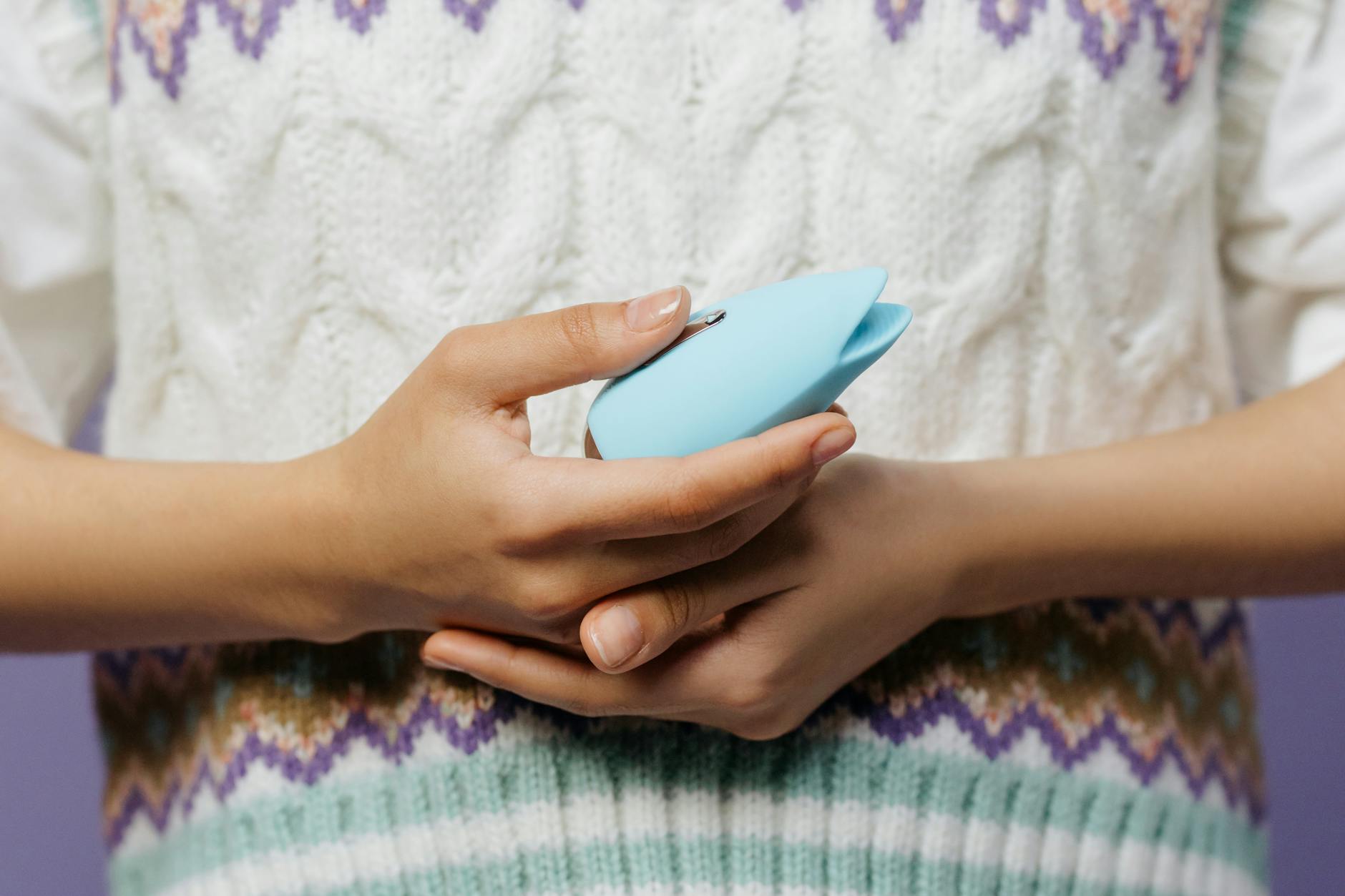
A lemon vibrator uses suction and pulse technology instead of straight vibration. Think of it less like a traditional vibrator and more like a tiny vacuum drawing your clitoral tissue in and releasing it in rhythmic waves. Why does this matter for low sensitivity?
Standard vibrators rely on frequency and intensity—basically, shaking fast enough to trigger nerve response. If your nerves aren't as responsive, you need more force or higher intensity. But suction stimulates differently. It engages the entire clitoral complex, not just the surface. It's like turning up the volume and changing the frequency at the same time.
I've watched clients with genuinely resigned attitudes about their sensitivity—people who'd stopped expecting much—light up when they actually feel something building. That's because suction bypasses some of the desensitization that happens with traditional vibration alone. Your nervous system responds to a different input pattern.
Starting with the right intensity level
Here's what usually goes wrong: someone with reduced sensitivity tries a lemon vibrator on the highest setting immediately, figuring they need maximum intensity. Then it feels harsh or overstimulating, and they write it off. Your reduced sensitivity doesn't mean you want pain.
Start on pattern 1 or 2. I mean actually start there, not "I'll try it and skip to 5 if I don't feel anything." Give yourself a full five to ten minutes on the gentlest setting. Your body needs time to wake up to a new sensation pattern. You're not looking for immediate fireworks. You're looking for a subtle building feeling, a warmth that deepens.
Once you feel something building—even if it's subtle—stay there for a bit. Let your nervous system acclimate to the sensation. Then, if you want more intensity, move up to pattern 3 or 4. Many people find they don't actually need the highest settings. The consistent suction-and-release pattern does the work over time.
The warm-up phase is non-negotiable
With reduced sensitivity, there's no shortcutting arousal. Your body needs time. Budget 20 to 30 minutes if you're exploring solo, or build in 15 minutes of foreplay before you introduce the lemon vibrator with a partner.
Use this time to touch yourself without any vibrator. Explore your outer labia, your inner thighs, the areas around your clitoris. This isn't foreplay to the "real thing." This is part of the real thing. You're literally priming your nervous system to respond. Blood flow increases, nerve endings become more responsive, and psychological arousal builds.
Then, when you introduce the lemon vibrator, your body is already partially awakened. The transition feels less like starting from zero.
The position that changes everything
Most people assume they should use a lemon vibrator the same way they use everything else. Lie on their back, apply directly. But if you have reduced sensitivity, positioning matters way more than you'd think.
Try lying on your stomach with a pillow under your hips. Press the lemon vibrator against your clitoris from this angle. The pressure is more consistent, the sensation feels more concentrated, and you have more control over intensity without cranking up the settings. You can rock gently against it instead of holding it still.
Alternatively, sitting upright with the vibrator gives you maximum control and visibility. You can see what's happening, adjust angle and pressure in real time, and pull back if anything feels uncomfortable.
The key: positions where you're actively using your core and hip muscles tend to amplify sensation. Static lying-down positions sometimes feel distant when sensitivity is already reduced.
Combining sensation with mental presence
Here's where most advice fails people with reduced sensitivity: they focus entirely on the vibrator and ignore their brain. Your nervous system doesn't live in your genitals in isolation. It's networked. If you're distracted, scrolling, or thinking about your to-do list, your clitoris isn't going to suddenly wake up because a fancy vibrator showed up.
Try this: close your eyes for the first 10 minutes. Notice the sensation, but don't pressure yourself to feel a certain way. Notice the rhythm of the suction. Notice the temperature. Notice where else in your body you feel something—your breasts, your thighs, your stomach. Pleasure is distributed across your whole nervous system, not localized to one spot.
If your mind wanders, that's fine. Gently bring your attention back. You're literally retraining your nervous system's sensitivity. That takes focus, not force.
When to adjust your approach
If you've used a lemon vibrator consistently for two weeks on patterns 1-3 with proper warm-up and mental presence, and you're still feeling nothing, something else might be at play. Reduced sensitivity tied to medications (particularly antidepressants) sometimes requires a different strategy entirely. Why Lemon Vibrators Feel Different After Antidepressants digs into this more deeply.
Similarly, if your reduced sensitivity correlates with relationship stress, grief, or emotional disconnection, a lemon vibrator alone won't fix it. You might need to address the underlying context first. That's not failure. That's your body being honest about what it needs.
But if you're working with hormonal changes specifically, or if sensitivity has gradually declined with age or stress, a lemon vibrator paired with consistent practice usually shifts things within three to four weeks.
Building endurance, not chasing one big moment
One of the most useful reframes I offer: stop thinking about orgasm as the finish line and start thinking about pleasure-building as the point. When sensitivity is reduced, chasing one orgasm often feels like labor. You're working toward something distant.
Instead, use your lemon vibrator to practice feeling good for 20 minutes. That's the goal. Sensation, warmth, presence. Some sessions will lead to orgasm. Some won't. Both are successful because you're retraining your nervous system to recognize and respond to pleasure.
After a few weeks of this, something subtle shifts. You start to feel building sensations faster. Your body recognizes the pattern of arousal. Orgasms become more accessible, not because the vibrator got better, but because your nervous system has relearned what responsiveness feels like.
A practical session structure
If you're starting fresh with reduced sensitivity, here's a framework that actually works:
Minutes 1-10: Manual exploration without vibrator. Touch and explore.
Minutes 11-20: Introduce the lemon vibrator on pattern 1. Stay present, notice sensation.
Minutes 21-30: If you feel building arousal, move to pattern 2 or 3. If not, stay where you are.
Minutes 31+: Continue as long as you're present and enjoying it. Stop when you feel done, not when you feel you "should" stop.
Consistency beats intensity here. Three sessions a week of 30 to 40 minutes will shift your sensitivity faster than one session at maximum intensity.
When to bring a partner in
If you're working with a partner, solo exploration is actually your best first step. You need to know what works for your body in isolation before you introduce someone else's preferences and timing into the mix.
Once you've figured out your baseline—how long warm-up takes, which patterns feel best, what positions amplify sensation—then you can incorporate your partner. How to Use a Lemon Vibrator During Sex With a Partner covers that collaboration more fully.
In the meantime, your partner can hold space without adding pressure. That's actually the most supportive thing they can do.
Frequently asked questions
How long before I feel a real difference with reduced sensitivity?
Two to three weeks of consistent use usually brings noticeable shifts. Your nervous system adapts faster than you'd think once it's consistently receiving new input. Some people feel something within days; others need a full month. Consistency matters far more than intensity.
Can I use a lemon vibrator if my reduced sensitivity is medication-related?
Yes, but you might need to adjust expectations. Some medications genuinely dampen nerve response at a level a vibrator alone can't overcome. That doesn't mean lemon vibrators won't help. It means you might be working toward building sensation gradually rather than restoring it quickly. Talk with your doctor if you're wondering whether your medication is the culprit.
What if a lemon vibrator feels too intense even on the lowest setting?
Start with the lowest pattern, but reduce pressure. Don't press it firmly against your clitoris. Let it rest gently against your vulva and let the suction do the work. You might also try using it through underwear or a thin fabric to diffuse intensity. Your sensitivity will build once your nervous system acclimates.
Is reduced clitoral sensitivity permanent?
Not necessarily. It depends on the cause. Age-related sensitivity changes are real but often reversible through consistent stimulation practice. Stress-related or relationship-related sensitivity loss often improves when the underlying stressor shifts. Medication-related sensitivity loss sometimes improves if your prescription changes. Hormonal shifts are sometimes reversible with treatment. Nothing is necessarily permanent.
Can I combine a lemon vibrator with other stimulation if sensitivity is really low?
Absolutely. Partner touch, manual stimulation, penetration, and lemon vibrator use all work together. In fact, layering sensations often helps with reduced sensitivity because you're activating multiple nerve pathways at once. Your nervous system responds to variety.
How do I know if my reduced sensitivity is tied to relationship issues versus physical changes?
Notice whether reduced sensitivity happens across all contexts or mainly with your partner. If you feel sensation alone but not with your partner, the issue is relational. If sensitivity is uniformly low everywhere, it's more likely physical or stress-based. Often it's both. That's why talking with a therapist or couples counselor can help clarify what you're actually dealing with.
Your pleasure matters
Reduced clitoral sensitivity is frustrating, sometimes genuinely discouraging. But it's not the end of pleasure. It's an invitation to get curious about your body again, to try new approaches, to rebuild connection to sensation. A lemon vibrator is one tool that works because it engages your nervous system differently than you might expect. Paired with patience, presence, and consistency, it often reawakens the responsiveness you thought you'd lost.
If you're struggling with this, you're not alone. And you're not broken. Your body's just asking for something different. That's okay to answer.