
Here's the thing about new relationships and pleasure
You're attracted. You're excited. And the moment things get intimate, your brain floods with questions: Am I taking too long to orgasm? Does my body look weird? Is this person judging me? Is there something wrong with me if I need help?
That mental noise doesn't just make sex feel awkward. It shuts down the exact neural pathways that generate arousal and pleasure. You can't think yourself into an orgasm while also thinking about whether you look weird. The two are incompatible.
New relationship anxiety is so common that it's basically the default state. But it's also completely fixable. And honestly, introducing a lemon vibrator early on is one of the smartest moves you can make to short-circuit that anxiety and build actual confidence with your partner.
Why new relationships trigger performance anxiety
Psychologically, what's happening is straightforward. Your nervous system is in a heightened alert state around a new partner. You're scanning for rejection signals. You're monitoring their facial expressions, their touch, their breathing. That hypervigilance feels like intensity and desire on the surface, but underneath, it's a stress response.
Add vulnerability to that. Sex is one of the few contexts where you show your body unfiltered. For many people, especially women and femme folks, that's paired with a lifetime of messaging that your body is either a display for others or something to manage and hide. So here you are, naked with someone new, and your brain is running a simultaneous audit of how you look, whether they find you attractive, and whether your arousal response is "normal" enough.
A lemon vibrator changes that dynamic in two ways.
First, it gives you control. You're not relying entirely on your partner's hands or body. You have a tool that feels consistent, reliable, and effective. That shifts you from being an observer of your own pleasure ("Is this working?") to an active architect of it.
Second, it normalizes the conversation. When you suggest bringing a vibrator into sex with a partner, you're saying out loud: I know what makes me feel good, and I'm not embarrassed about it. That's an incredibly powerful signal. Most partners respond to that confidence with excitement, not judgment.
The conversation that actually works
Don't overthink the introduction. Don't wait for a "perfect moment" or build it up into something mystical. The best approach is casual and direct.
Say something like: "I've been thinking about trying a vibrator together. I have a lemon vibrator I really like, and I want to see how it feels with you in the picture. I'm curious if you'd be into it." That's it. You've named the object, you've stated your interest, and you've asked for their input.
If their response is hesitation, curiosity, or anything other than "No, I don't want that," keep talking. Sometimes people worry that introducing a toy means their partner is unsatisfied, or that the vibrator is a replacement for them. Address that directly: "This isn't about anything being wrong. This is about adding something that feels good. I want you there with me." Most partners, once they understand you're not replacing them but expanding the experience, get on board.
If the response is "No, I don't want that," you have useful information. That tells you something about their comfort with sexuality, their boundaries, and their flexibility. Those are worth knowing early.
Starting solo, then introducing your partner
Here's a practical tip: use your lemon vibrator alone first, before you bring it into partnered sex. You need to know your own response.
Spend time exploring what feels good. What pattern do you like? How much pressure feels right? How long does it take you to build arousal? Do you like it best at the start of sex, or later when you're already aroused? These details matter because they become part of the conversation with your partner.
When you introduce it with them, you're not discovering your body for the first time while they watch. You're showing them something you already understand. That's a fundamentally different experience. You're confident instead of exploratory. And confidence is genuinely contagious.
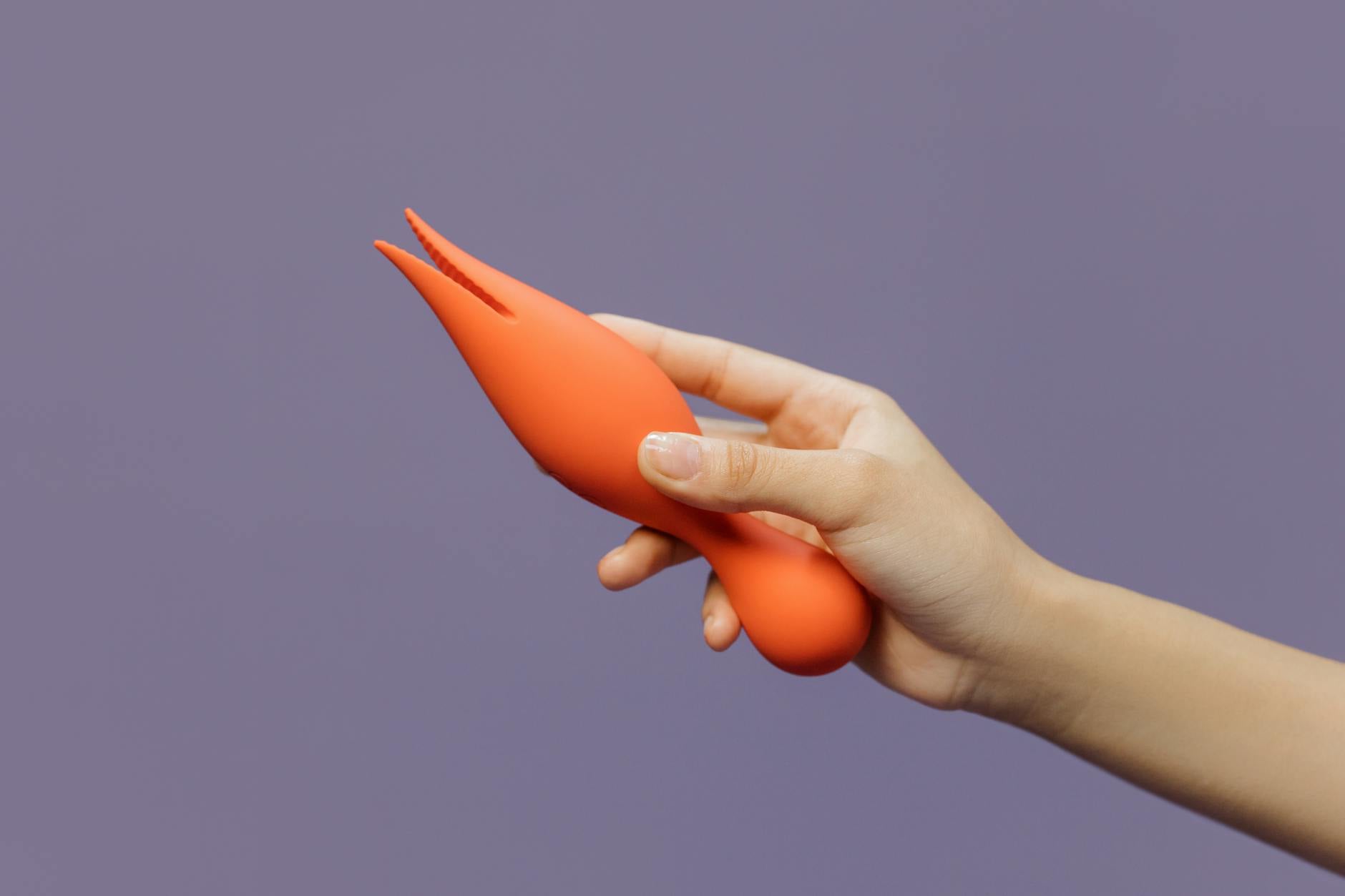
Photo by cottonbro studio on Pexels
What to actually do during sex
Start with this: your partner touches you normally, and you use the lemon vibrator on yourself. That's the lowest-stakes version. You're not asking them to do something new, and you get to control the vibration while they're present.
From there, you can evolve. Some partners love holding the vibrator while they touch you with their hands or mouth elsewhere. Some get into using it together as part of foreplay. Some couples find that one person uses the vibrator while the other penetrates. There are infinite configurations. The point is to experiment without pressure.
Here's what's crucial: don't expect the first time to feel magical. New sensations take your nervous system a minute to integrate. The first time using a lemon vibrator with a partner, you might feel awkward or distracted. That's normal. By the third or fourth time, your body and brain relax into it, and the pleasure gets real.
Managing the anxiety underneath
Introducing a toy can accidentally amplify performance anxiety if you frame it wrong. If you're thinking "This better work because I'm putting myself out there," you're loading it with too much weight.
Instead, try this reframe: "I'm showing my partner something I like. There's no required outcome. If it feels good, great. If it doesn't, we try something else. Either way, I'm being honest about what I want."
That's actually the deepest pleasure benefit of introducing a lemon vibrator early in a relationship. It trains you to speak up about pleasure without shame. It normalizes the idea that sex isn't a performance with a pass-or-fail grade. It's a conversation between two people figuring out what feels good together.
If anxiety is genuinely blocking you, how to use a lemon vibrator to build arousal more slowly and mindfully walks through specific techniques for dialing down mental noise. And if you're noticing that you struggle with nervous system activation around new partners in general, that might be worth exploring with a therapist.
The partner who gets it right
A good partner responds to vulnerability with curiosity, not judgment. When you introduce a vibrator, they ask questions. They want to know what feels good. They're not threatened. They see it as an opportunity to learn more about you and to have better sex together.
If your partner responds with dismissal, resentment, or shame, that's information too. Early on, those signs matter more than they do later in a relationship. You're still evaluating compatibility. Sexual compatibility includes the ability to talk openly about pleasure, to experiment, and to be cheered on by the other person.
Real talk about timing and trust
There's a version of this that I don't recommend: introducing a vibrator on the first night you sleep together, before you've even held hands sober. Pleasure compounds over time. The more comfortable you are with someone, the more you can relax, and the better everything feels.
But there's also no magical timeline. Some people feel comfortable introducing a toy after three dates. Others wait a few months. The metric isn't time. It's trust. When you feel like this person genuinely cares about your pleasure and isn't going to weaponize vulnerability against you, you're ready.
FAQ: New Relationships and Vibrators
What if my partner thinks a vibrator means I'm not satisfied with them?
Most partners have this worry in their head. Saying it out loud helps. "I need you to know that this isn't about you or anything you're not doing. This is about exploring something new together. You turn me on. The vibrator is just adding another sensation." Be specific. Tell them what you love about sex with them. Then add: "I want to try this too."
Can I use a lemon vibrator if my partner has a penis?
Absolutely. A lemon vibrator works during any configuration: partnered sex, solo play during partnered sex, foreplay, or after. Penis-owning partners often love watching a partner use a vibrator on themselves. It's hot, it's intimate, and it gives them a clear roadmap of what feels good.
What if my partner wants to use the vibrator on me but I'm not sure I trust them with it yet?
Then don't let them. Use it on yourself while they watch and touch you elsewhere. Build that trust over time. Your comfort matters more than anything. A good partner will understand that.
Is it weird to use a vibrator right after you start dating?
No. People have sex right after they start dating. Vibrators are just a tool for pleasure. If you're comfortable enough to be naked together, you're comfortable enough to introduce a tool that increases pleasure. The only "weird" version is one where you use a vibrator but never talk about what you like or need. That's performative. Talking about it and being clear about what you want is just good communication.
What if I finish too quickly with the vibrator?
That's genuinely not a problem, but I hear the anxiety underneath. Orgasm isn't the point of sex. Pleasure is. If you come quickly, that's information. Maybe you need longer foreplay before the vibrator comes out. Maybe you like one round and then moving into other things. Maybe you come multiple times. All of those are normal.
How do I know if my partner is actually comfortable or just saying yes?
Look for enthusiasm in their body language, not just their words. Do they ask questions? Do they seem curious? Do they touch you differently? Do they initiate the vibrator again at another time? If someone's just tolerating it, they don't usually bring it up twice. If they're into it, they will.
The bigger picture: building sexual confidence together
New relationship anxiety isn't really about the vibrator. It's about learning to trust yourself and to trust that your partner won't abandon you when you're honest about what you want. A lemon vibrator is just the vehicle.
When you use one early in a relationship, you're building a foundation for vulnerability and communication that pays dividends later. You're saying: I know myself, I'm not ashamed, and I trust you enough to show you. That's what actually good sex is made of.
Your pleasure matters. New relationships are the perfect time to prove that to yourself and to your partner.