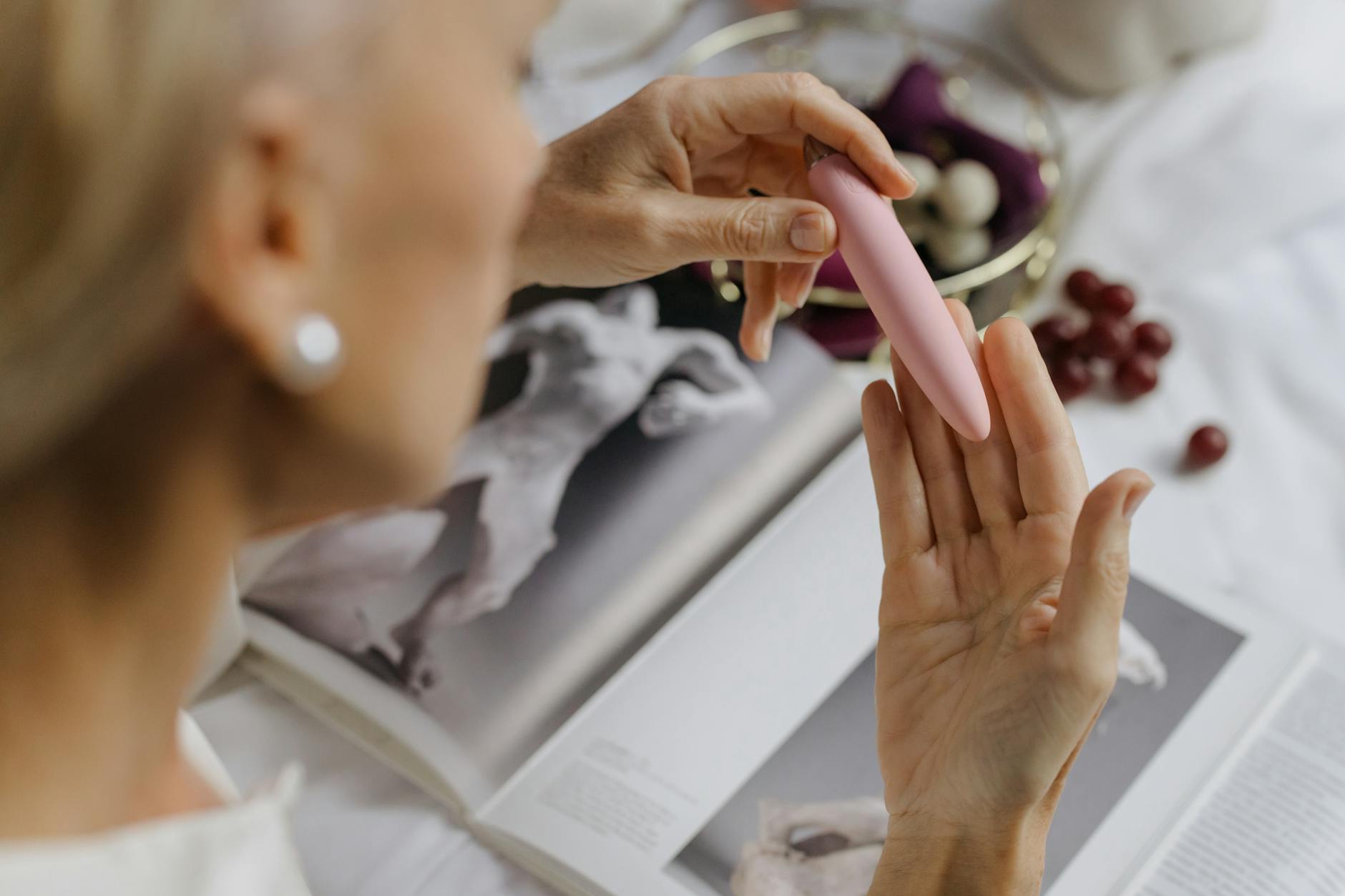
Here's the thing about vulvodynia and pleasure
Vulvodynia is chronic pain. It's also invisible, isolating, and wildly misunderstood by most sexual health advice. When someone tells you to "just relax" or "use a vibrator," they're not wrong about the vibrator part. They're just wrong about which kind.
Traditional vibrators can feel like amplified pain for people with vulvodynia. The constant oscillation triggers nerves that are already hypersensitive. But lemon vibrators work on a completely different principle. Instead of vibrating against tissue, they create rhythmic suction. That distinction matters enormously when your nervous system is already in overdrive.
I've worked with dozens of clients who thought they had to choose between pleasure and pain management. They didn't. They just needed a different tool.
What vulvodynia actually does to sensation
Vulvodynia is a pain condition that affects the vulva without an obvious cause (no infection, no dermatological issue). The pain ranges from localized to widespread, constant to intermittent, burning to stabbing. What they all have in common: the nervous system has become sensitized. Touch that would normally feel pleasant registers as painful instead.
This happens because the nerves in the vulvar region are receiving pain signals at lower thresholds than normal. It's not psychological. Brain imaging shows real, measurable changes in how pain signals are processed. The body is essentially turning up the volume on pain while turning down the volume on pleasure.
Here's where most sexual advice misses the mark. A standard vibrator creates mechanical pressure and friction against tissue. For someone with vulvodynia, this is exactly the wrong type of stimulation. The pressure itself can trigger the pain response, no matter how gentle you set it.
How suction-based stimulation changes the equation
A lemon vibrator (or any suction-based clitoral vibrator) works by creating gentle waves of suction rather than direct mechanical vibration. Instead of oscillating against the vulva, it creates a rhythmic pulling sensation. Think of it less like a jackhammer and more like a gentle tide.
This matters physiologically for two reasons:
First, reduced direct pressure. Suction stimulates the clitoris and surrounding tissue without the localized pressure of a vibrating surface. For people with vulvodynia, this can be the difference between pleasure and pain. You're getting clitoral stimulation without triggering the pressure-sensitive nerve endings that are in hyperdrive.
Second, different nerve activation. The clitoris has different types of nerve endings. Some respond to pressure and vibration. Others respond to pulling and suction. By switching the type of stimulation, you're activating a different neural pathway. You're essentially asking your nervous system to process sensation in a way that doesn't automatically trigger the pain alarm.
Many of my clients with vulvodynia report that suction feels "cleaner" than vibration. It doesn't have the jangling, overwhelming quality of traditional vibrators. It feels more like intention and less like sensory assault.
Starting slow when your nervous system is primed for pain
If you have vulvodynia, your nervous system has learned to protect you by going into pain mode quickly. Using a lemon clitoral vibrator doesn't override that. It just gives you a tool that doesn't automatically trigger the protective response.
That said, starting is still careful. Here's what I recommend:
Day one: no insertion, no direct contact. Hold the lemon vibrator near the vulva (not touching) and activate the lowest suction setting. Notice what your body does. Does it feel like relief? Neutral? Still painful? Spend 3-5 minutes just observing. Your job is not to orgasm. Your job is to gather data.
Days two through five: external contact only. Once you know the lowest setting doesn't trigger pain, try touching the device to the outer vulva or labia majora. Again, lowest setting. Give yourself permission to use it for two minutes and stop. This is a sensory reintroduction, not a performance.
Week two: same external area, slightly longer. Bump the session to 5-10 minutes. If you're still pain-free and feel any arousal building, that's a win. You're teaching your nervous system that this type of touch doesn't require defense.
Week three and beyond: move inward slowly. If the external area is tolerating the suction well, you can gradually move toward the clitoral area. Still low settings. Still short sessions. The point is to avoid overwhelming your nervous system.
I know this sounds glacially slow. It is. That's exactly right. Vulvodynia thrives on pushing through discomfort. Your nervous system needs the opposite message: that sensation can be safe and that you're in control.
The emotional piece (which is actually physiological)
Here's what nobody tells you about chronic pain and pleasure. The emotional experience directly affects nerve sensitivity. When you approach your lemon vibrator with dread ("Will this hurt?"), your nervous system tenses. When you approach with curiosity ("What will this feel like?"), your nervous system relaxes slightly. That difference changes the pain threshold.
I'm not saying vulvodynia is in your head. I'm saying that anxiety about pain makes pain worse neurologically. So one of the most useful things you can do is separate the physical from the emotional.
Before you use your lemon vibrator, spend a minute doing this: breathe in for four counts, hold for four, out for six. The extended exhale activates your parasympathetic nervous system (the part that says "we're safe"). Do this three times. Then pick up your device. You've just told your body that touch is coming and that you're in control of it.
Many clients find this shifts the entire experience. Not because the pain magically disappears, but because the anxiety that amplifies pain does.
When to involve a pelvic floor physical therapist
Vulvodynia and pelvic floor tension often show up together. Your pelvic floor muscles tighten in response to pain, which creates more pain, which creates more tension. It's a feedback loop.
A pelvic floor PT can help you break that loop. They teach you how to relax these muscles (not tighten them, which is what most people instinctively do). This is separate from using a lemon vibrator, but it works beautifully alongside it.
If you've been dealing with vulvodynia for more than a few months, seeing a pelvic floor specialist is worth the investment. Insurance often covers it if you have a referral from your GP. And here's the thing: once you've done a few sessions of PT and learned how to release pelvic tension, using your lemon vibrator becomes much more pleasurable.
When medication and tools work together
Some people benefit from topical numbing creams (compounded with lidocaine) used 10-15 minutes before pleasure. Others use low-dose tricyclic antidepressants or gabapentin, which calm overactive nerves. A few need both.
If you're using medication for vulvodynia, a lemon vibrator is still useful. In fact, it's often more useful because you're starting from a less painful baseline. Talk to your doctor about timing. Some people apply numbing cream, wait 15 minutes, then use their lemon clitoral vibrator. Others find they don't need numbing at all once they're on nerve-calming medication.
The point: this isn't either/or. Your lemon vibrator is one tool in a toolkit that might include physical therapy, medication, breathing, pelvic floor work, and honest conversation with your partner.
FAQ
Can I use a lemon vibrator if I have generalized vulvodynia?
Yes, but start even slower than the timeline I suggested. Generalized vulvodynia affects the entire vulva, so every millimeter is potentially sensitive. Begin with the device held an inch away from your body, not touching at all. Let your nervous system get used to the sound and the idea of it before contact happens. You might spend your first week just having the device nearby during relaxation.
Does suction feel completely different than vibration?
It does, and most people either love it immediately or need time to adjust. Some describe suction as "pulling" or "drawing." Others say it feels more concentrated. If your first experience is "this is weird," that's normal. Weird often becomes wonderful by session three or four as your body recognizes the sensation as safe.
What if suction still triggers pain?
Move even lower. The lemon vibrator has multiple suction intensities. If the lowest setting hurts, try holding it further away. Or use it for 60 seconds instead of five minutes. If even the gentlest contact triggers pain, that's useful data. It might mean your nervous system needs more time, or it might mean you benefit from topical numbing or medication first. Talk to your doctor.
Can I use a lemon vibrator during a vulvodynia flare-up?
Not usually. A flare is when pain spikes above your baseline. During a flare, your nervous system is maximally sensitive. You're better off resting and using whatever pain management your doctor recommends. Once the flare subsides and you're back to your baseline, pleasure tools become useful again. This is hard because flares often kill desire in the moment. That's temporary and normal.
Will using a lemon vibrator "train" my nervous system to feel less pain?
Not directly. But it can help you reclaim the experience of pleasure without pain, which is psychologically powerful. Over time, positive experiences with sensation can help your nervous system learn that touch doesn't always mean danger. This isn't a cure. Vulvodynia may always require management. But pleasure is part of that management. Your nervous system needs to remember that touch can feel good.
What if my partner wants to use the lemon vibrator with me?
That's a beautiful intention, but slow down. When you're dealing with chronic pain, the pressure to make it work for both of you can actually increase your pain. Start alone, establish what feels safe, then invite your partner to observe (not participate) if you want. This takes pressure off the experience and helps your partner understand what helps. If you eventually want them involved, that conversation happens from a place of "I know what works for me" instead of "I'm trying to make this work for us."
The point
Vulvodynia doesn't mean the end of pleasure. It means finding tools that work with your body instead of against it. A lemon vibrator is designed to create sensation without the pressure that triggers pain. That's not a coincidence. That's physics and neurology working in your favor.
If you're living with vulvodynia, your pleasure matters. Your nervous system is protecting you, and that's smart. But protection and pleasure aren't opposites. They can coexist. A lemon clitoral vibrator is one way to start that conversation with your body.