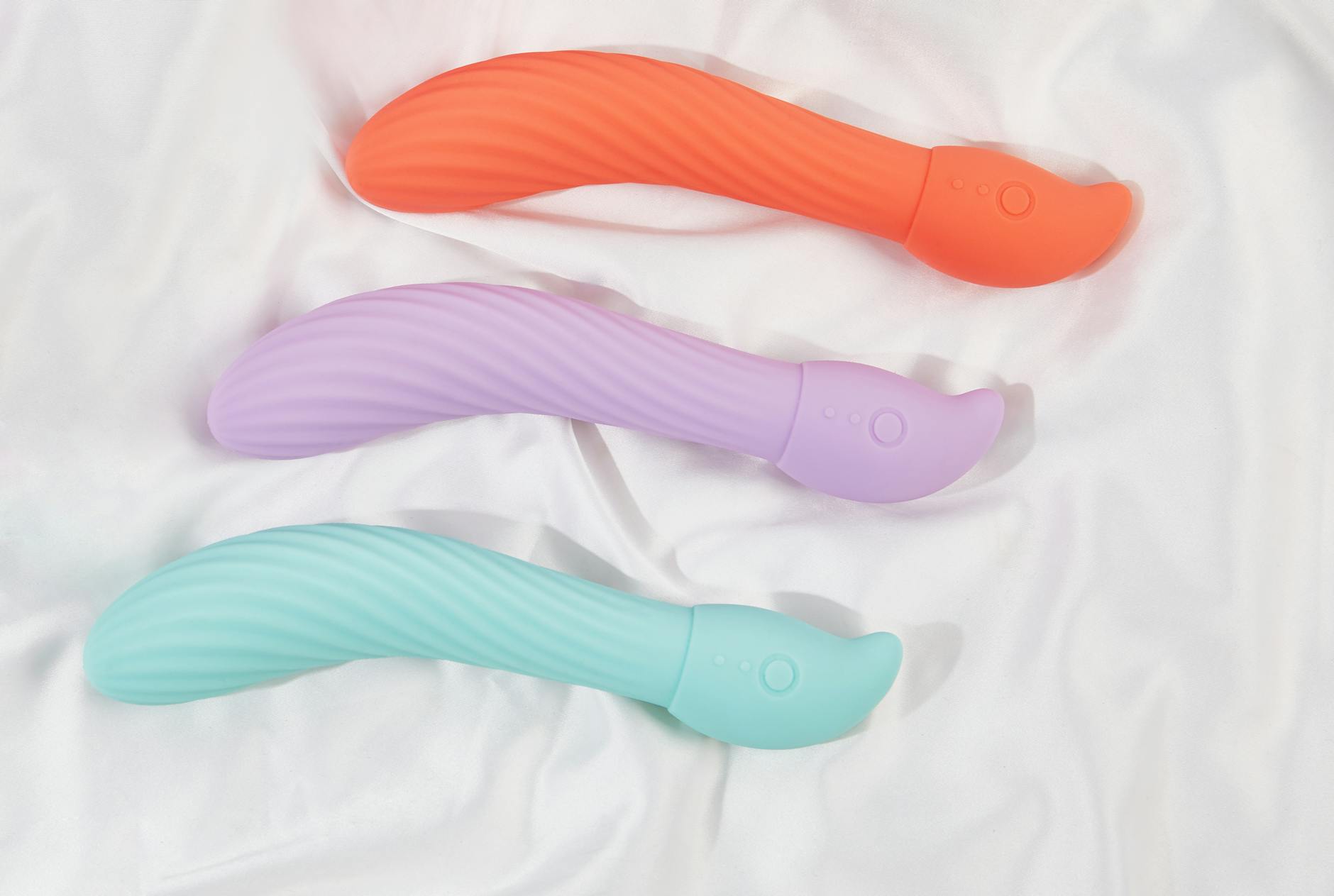
Your clitoral sensitivity is not constant
Here's the thing most people don't realize: the pleasure you get from lemon vibrators isn't fixed. It shifts. Not randomly. It shifts according to where you are in your cycle, what you're stressed about, and how much sleep you got last night.
This is not a flaw in you or in the device. It's actually useful information. Once you understand how your arousal patterns change, clitoral vibrators like the Lem start feeling dramatically better because you're working with your body, not against it.
The follicular phase: sensitivity is rising
During the follicular phase (the roughly two weeks after your period ends, before ovulation), estrogen is climbing. Blood flow to your genitals increases. The tissue becomes more engorged and responsive. Your clitoris literally swells slightly as blood flow increases.
What does this feel like with a lemon vibrator? More sensation, faster arousal, and lower intensity settings feel satisfying. Many people find they prefer the Lem on patterns 2 or 3 during this phase instead of starting where they usually do.
Your arousal ramps up faster during the follicular phase. You might go from zero to very interested in 5 minutes instead of 15. The suction sensation that air-pulse clitoral vibrators like the Lem provide feels more intense because there's more engorgement to work with.
What to do:
If you usually start on pattern 4 or 5, try beginning at pattern 2 and letting it build. You might discover you actually prefer gentler intensities than you thought. Save the higher settings for when you really want them.
Ovulation: maximum sensitivity
About 14 days into a 28-day cycle, ovulation happens. Testosterone spikes. Estrogen is still elevated. Your clitoris is maximally engorged. Sensitivity is at its peak.
This is when many people report the most explosive orgasms and fastest arousal. If pleasure from lemon vibrators is ever going to feel transcendent, this is probably the window.
But here's the catch: maximum sensitivity can also mean maximum overstimulation. If you use your usual intensity level during ovulation and suddenly it feels too intense, that's not unusual. It's not that the Lem broke or that something's wrong with you. You're just more sensitive.
What to do:
Try going one pattern lower than usual during ovulation week. If it feels too strong, drop another level. You can always turn it up. You can't un-stimulate already-overstimulated nerve endings.
The luteal phase: sensitivity declines (and that's okay)
After ovulation, progesterone rises and estrogen drops. This is the luteal phase, roughly two weeks until your period. Blood flow to your genitals actually decreases slightly. The tissue becomes less engorged. Clitoral sensation feels muted compared to the first half of your cycle.
This is where people often get frustrated. They pull out the Lem expecting the same response as last week, and instead it feels like the vibrator isn't working as well. The vibrator is fine. Your arousal pathway is just less sensitive right now.
Some people find orgasm during the luteal phase takes longer or feels less intense. Some don't. Sensitivity changes are individual. But almost everyone notices some shift.
What to do:
Increase intensity slightly during the luteal phase. If pattern 3 felt great two weeks ago, try pattern 5 now. You're not being greedy or needing more stimulation in a permanent sense. Your body is temporarily less responsive. Turning up the dial compensates. Expect longer warm-up time, and that's completely normal.
How stress, sleep, and hormonal changes complicate the picture
Your menstrual cycle isn't the only thing that shifts arousal. Sleep deprivation tanks sensitivity. Stress constricts blood vessels and makes clitoral response harder to reach. Anxiety literally dampens the parasympathetic nervous system that enables arousal.
So you might be mid-follicular phase (sensitivity should be rising) but sleep-deprived and stressed about work. The Lem might feel less satisfying than usual, even though your hormones suggest it should feel amazing.
This is why tracking only your cycle isn't enough. You also need to notice how you actually feel on any given day.
What to do:
Keep a simple note on your phone. Not a diary. Just: date, cycle day, sleep quality (good/bad), stress level (low/medium/high), and one word about how pleasure felt (easy/medium/difficult). After two or three cycles, you'll see patterns. You'll realize that the weeks you sleep poorly, pleasure is harder to access. The weeks you're less stressed, it's easier.
Then you can adjust your expectations accordingly.
Why lemon suction vibrators respond differently to cycle changes
Air-pulse technology like the Lem uses suction and pulsing patterns instead of traditional vibration. This matters for cycle sensitivity because suction is less reliant on friction and more reliant on pressure and engorgement.
When tissue is fully engorged (ovulation), suction feels incredible. When tissue is less engorged (luteal phase), you might need to adjust the position or intensity to get the same seal and sensation.
This is actually an advantage. With a traditional vibrator, you're somewhat stuck with whatever vibration pattern it offers. With the Lem, you have multiple intensity levels and patterns to dial in. You can truly match the device to where your body is on any given day.

Photo by Frank Schrader on Pexels
How to work with hormonal birth control
If you're on the pill, your cycle sensitivity shifts are much smaller. The hormones in birth control suppress the natural rise and fall of estrogen and testosterone. Many people on the pill notice their sensitivity is more consistent across the month.
Some people appreciate this consistency. Some miss the intensity spikes of a natural cycle. Both are completely valid.
What matters is knowing where you fall. If you're on hormonal contraception and you feel like pleasure is always just okay but never amazing, the pill might be suppressing that natural peak sensitivity. That's not a reason to change contraception (your birth control works hard for you), but it's useful to know.
Some people find that on pill-free weeks or during lower-hormone formulations, sensitivity temporarily returns. If that appeals to you, talk to your doctor about switching to a lower-dose pill or trying a different formulation.
Non-hormonal cycle tracking and pleasure
If you don't track your cycle currently, you don't need fancy apps to start. Literally just note the date your period starts. That's day 1. Days 1 to about 5 are your period. Days 6 to 13 or so are the follicular phase (sensitivity climbing). Days 14 to 21 are ovulation and early luteal phase (sensitivity high, then declining). Days 22 to 28 are late luteal phase (sensitivity lowest).
This is approximate. Every body is different. But it gives you a starting point to notice your own patterns.
Once you see the rhythm, you can set low expectations during your period and late luteal phase. You can plan to really explore during ovulation. You can dial the Lem up during the second half of your cycle and down during the first half.
This isn't about forcing pleasure on a schedule. It's about removing frustration by understanding why some weeks feel easier than others.
The partnership conversation
If you have a partner, let them know this is happening. Not during sex. Just in conversation.
"My sensitivity shifts week to week. Some weeks I need stronger stimulation, some weeks gentler. Nothing's wrong. It's just biology." Most partners find this genuinely helpful to know.
This also takes pressure off both of you. If week one feels amazing and week three feels meh, you're both less likely to interpret it as "the spark is dying" when it's actually just "progesterone."
People also ask
Why does my clitoral vibrator feel stronger at different times?
Your clitoral tissue changes throughout your cycle due to fluctuating hormones, particularly estrogen and testosterone. During the follicular phase and ovulation, more blood flows to the area and tissue becomes more engorged, making sensation feel stronger. During the luteal phase, engorgement decreases and sensitivity drops. The vibrator is unchanged. Your sensitivity is what shifts.
Can I use lemon vibrators safely during my period?
Absolutely. There's nothing unsafe about using any sex toy, including air-pulse clitoral vibrators like the Lem, during menstruation. Some people find pleasure more accessible during their period because the area has increased blood flow. Some find it less comfortable. Listen to your body. If it feels good, you're fine.
Does cycle sensitivity affect all clitoral vibrators the same way?
No. Traditional vibrators tend to feel more consistent across your cycle because they provide steady vibration regardless of engorgement. Air-pulse suction devices like lemon clitoral vibrators are more responsive to changes in engorgement and blood flow, so you'll notice bigger shifts. This actually makes them more adaptable to your body's changing needs.
How long does it take to notice my own sensitivity patterns?
Two or three full cycles. By the third cycle, you'll probably see the pattern clearly. Start noting the date your period begins, your stress level, sleep quality, and one word about how pleasure felt. After three months of this simple tracking, your individual pattern becomes obvious.
What if my sensitivity doesn't follow a typical cycle pattern?
Cycles aren't perfectly regular. Stress, travel, illness, and major life changes throw things off. Some people have longer or shorter cycles. Some people have irregular cycles. None of this means you can't notice your own patterns. Just track what actually happens for you instead of forcing it to match a textbook. Your pattern is valid even if it's not predictable.
Can I change my sensitivity with diet or supplements?
To some degree. Good sleep, regular exercise, and low stress all support healthy blood flow and hormone balance, which supports clitoral sensitivity. Magnesium supports muscle relaxation. Iron supports oxygen delivery. But nothing turns the luteal phase into the follicular phase. You can optimize within your cycle, but the basic rhythm is biological. Work with it, not against it.
The real benefit of understanding this
Once you know your sensitivity shifts, you stop blaming yourself or the device when things feel different. You're not broken. The Lem isn't broken. Your body is doing exactly what healthy bodies do: responding to hormonal changes.
That knowledge alone often transforms the experience. You can plan around it. You can adjust intensity. You can set realistic expectations. And honestly, that freedom is what makes the difference between okay pleasure and the kind that actually surprises you.
Ready to explore what works best for you? Check out our guide to choosing your first clitoral vibrator or learn more about how lemon vibrators improve sensitivity after hormonal changes.
Your arousal deserves attention. And it deserves honesty about how it actually works.