
Let's name what's actually happening
Your partner's libido is lower than yours. Maybe it's always been this way. Maybe it shifted last year, or last month, or sometime between the pandemic and now. Either way, you're here because you need an answer that isn't "just accept it" or "leave them," and you're wondering if a lemon vibrator can help bridge the gap.
It can. But not in the way you might think.
A lemon clitoral vibrator isn't a substitute for your partner's desire, and treating it like one will make the mismatch worse. What it actually does is separate your pleasure from their ability to provide it. That distinction changes everything about how you can move forward together.
The desire mismatch reality
When one partner has significantly lower libido, the higher-desire partner usually ends up in one of three traps. The first is self-blame: "I'm asking for too much. I'm difficult. I'm too needy." The second is resentment: "They don't care about me. They've checked out." The third is guilt: "If I take care of myself sexually, I'm betraying them."
None of these are true, and all three kill intimacy faster than the original mismatch ever could.
Here's what's actually going on. Libido is affected by stress, health, medication, relationship dynamics, attachment history, and about a dozen other variables that have nothing to do with how much your partner loves you. A person can adore you completely and still have a lower sex drive. These are separate systems.
When you internalize that separation, using a lemon vibrator stops feeling like cheating and starts feeling like self-care. Which it is.
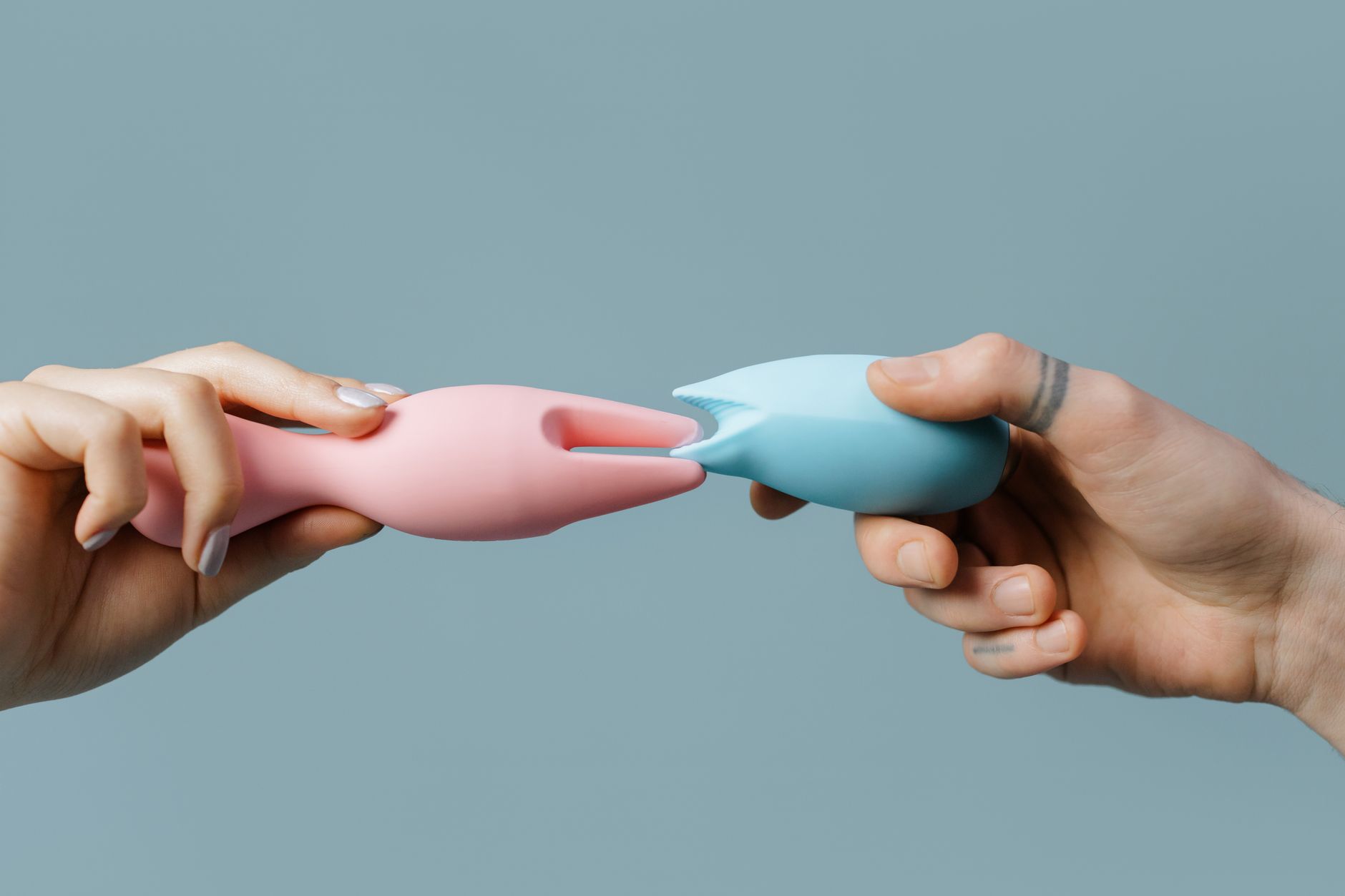
Photo by cottonbro studio on Pexels
How clitoral vibrators actually help the relationship
This sounds counterintuitive, but it works because of basic psychology. When you're chronically sexually frustrated, that frustration bleeds into everything else. You're snappier at dinner. You're less patient with small things. You withdraw emotionally without quite knowing why. Your partner feels this shift and responds with their own withdrawal, and suddenly you're in a cycle where the original desire mismatch has become resentment, distance, and disconnection.
Using a lemon sucker on your own breaks that cycle. You're no longer carrying untouched desire into everyday life. You're meeting your own needs instead of expecting your partner to make up for what's missing. Paradoxically, this often makes you feel more affectionate toward them, not less. You're not resentful. You're not desperate. You can actually be present.
For many couples, this is when real conversation becomes possible. Not "why don't you want me" but "I care about you and I also need regular physical release. How do we make both things true?"
Starting the conversation without making it worse
If your partner doesn't know you're thinking about using a lemon vibrator, now is the time to tell them. Not in the middle of intimacy. Not as a test. Not as a subtle hint about their inadequacy.
The framing matters enormously. What you're saying is: "I want to take responsibility for my own pleasure so that I'm not putting that pressure on you. I'm not doing this because of anything you did. I'm doing it because I need this for me, and I think it'll actually help us."
Some partners will be relieved. Some will feel hurt initially. Some will surprise you by wanting to be part of it. None of these responses means you shouldn't do it.
If your partner says something like "that means you don't need me," that's a sign that their libido mismatch is connected to deeper insecurity or attachment fears. How to Use a Lemon Vibrator When You Have Anxious Attachment addresses this directly, but you might also benefit from a few couples sessions with someone trained in desire differences.
The practical setup: using a lem vibrator solo in a partnered relationship
There are three basic scenarios here, and they require different approaches.
Scenario 1: You use a lemon clitoral vibrator alone. This is the straightforward one. Find a time when you have privacy and you're actually in the mood. Don't use it as a substitution when your partner is in the room wanting connection. Don't use it when you're angry or resentful. Use it the same way you'd use any self-care: when you need it, with intention, without secrecy but also without performance.
Scenario 2: Your partner watches or participates without direct penetration. Some lower-libido partners find that watching is actually freeing for them. There's no pressure to perform or reciprocate. They can be present without having to generate desire they don't feel. If this applies to your relationship, a lemon vibrator is perfect because it's entirely about your pleasure. You can take your time. They can watch or not watch. The pressure is off both of you.
Scenario 3: You use it together as foreplay. This is slower to earn and worth taking time on. Your partner uses the nancy lem vibrator on you, or you use it on yourself while they touch you elsewhere. This requires that both of you have worked through some of the shame or resentment around desire differences, but when you get here, it can be genuinely connecting. You're not asking them to want more. You're just asking them to be present while you enjoy something.
Managing the shame that shows up
A lot of people feel guilty for having sexual needs that don't match their partner's. That guilt often gets confused with loyalty. Here's the truth: your desire to orgasm is not an attack on your partner. It's not a referendum on your relationship. It's a baseline human need.
If your partner's libido is low because of depression, stress, medication effects, or past trauma, they deserve compassion. And you also deserve to have a body that feels good. These things coexist.
Sometimes the guilt comes from your own history. Maybe you were taught that sexuality outside of partnership is selfish, or that wanting pleasure is greedy. If that's running in the background, acknowledge it. A lem vibrator is a tool, not a betrayal. Using it is a form of respect for your own body, and that's not negotiable.
What changes when you actually do this
People often report that something shifts once they've given themselves permission to use a clitoral vibrator independently. The desperation lifts. You stop waiting for your partner to want you. You stop interpreting their low libido as rejection of you specifically.
Your partner often notices this shift too. When you're not resentful, you're more affectionate. When you're not depleted, you have more energy for connection. Sometimes this creates enough safety that their libido actually improves, because now sex doesn't feel like a demand or a test.
That's not guaranteed, and it shouldn't be your reason for doing this. But it happens often enough that it's worth noting. Lower libido is often a response to pressure, not the root cause. Remove the pressure and sometimes desire returns.
When to bring in professional support
If the desire mismatch is severe (like one partner wants sex weekly and the other wants it monthly), that's a couples issue, not just an individual one. You might benefit from working with a therapist trained in sex-positive counseling.
If your partner's low libido is new and unexplained, it's worth checking for medical causes. Thyroid problems, hormonal shifts, depression, medication side effects, and other medical factors can all tank desire. How to Use a Lemon Vibrator for Better Results With Thyroid Changes covers one specific scenario, but any significant change warrants a GP visit.
If your partner's low libido is connected to deeper relationship problems (infidelity, broken trust, unresolved conflict), no vibrator is going to fix that. The desire mismatch is a symptom of a bigger rupture. Address the rupture first.
FAQ: Low libido mismatch and clitoral vibrators
What if my partner feels threatened by my using a lemon vibrator?
That's usually about insecurity or past experience, not about the vibrator. Acknowledge their feelings without abandoning your needs. You might say something like: "I understand this feels scary to you. It's not about you being inadequate. It's about me taking care of myself so I can show up better in our relationship." If the threat continues, that's worth exploring in therapy.
Can a lemon clitoral vibrator actually improve desire mismatch in a relationship?
Not directly. But it can remove resentment and pressure, which are often what's keeping desire suppressed. When you're not desperate and your partner isn't defensive, conversation becomes possible. Real improvement comes from that conversation, not from the vibrator itself.
Is using an adult toy when your partner has low libido cheating?
No. You're meeting your own needs so you don't make your partner responsible for your pleasure. That's actually more respectful, not less. Cheating involves deception and betrayal of trust. Self-pleasure with your partner's knowledge is neither.
Should I hide my lemon vibrator from my partner if they're uncomfortable with it?
Not permanently. Hiding things creates distance and shame. Have the uncomfortable conversation. Set a boundary: "I'm going to care for my body. You don't have to participate, but I'm not going to pretend I'm not doing this." This is hard, but it's healthier than secrecy.
What if using a vibrator makes my partner want me even less?
That's unlikely, but if it happens, pay attention to what's actually going on. Is their libido actually dropping, or are they withdrawing emotionally? There's a difference. One might be about them feeling replaced. The other might be about relationship rupture that needs repair. Talk to a therapist about it.
Can we use a lemon sucker together if my partner has low libido?
Absolutely. Some lower-desire partners actually prefer this because it removes the pressure for them to perform. You get pleasure, they get to be present without having to generate their own desire. This can actually build intimacy. Start slowly and check in about what feels good for both of you.
The hard part is the conversation, not the vibrator
Honestly, using a lemon vibrator when your partner has low libido is the easy part. The hard part is naming the gap, accepting that it exists, deciding you deserve pleasure anyway, and having the conversation that follows. That's where most couples get stuck.
But on the other side of that conversation is something that a lot of mismatched couples never find: the ability to separate your partner's libido from your worth, and to meet your own needs without resentment. A clitoral vibrator is just a tool. The real shift happens when you give yourself permission to need it.
If you're stuck on how to have this conversation with your partner, How to Talk About Using a Lemon Vibrator During Sex With Your Partner breaks down exactly how to do it.
Your pleasure matters. Your body matters. Your partnership can survive you taking care of both.